
Dyckia marnier-lapostollei
Dyckia marnier-lapostollei
Description
Growing requirements
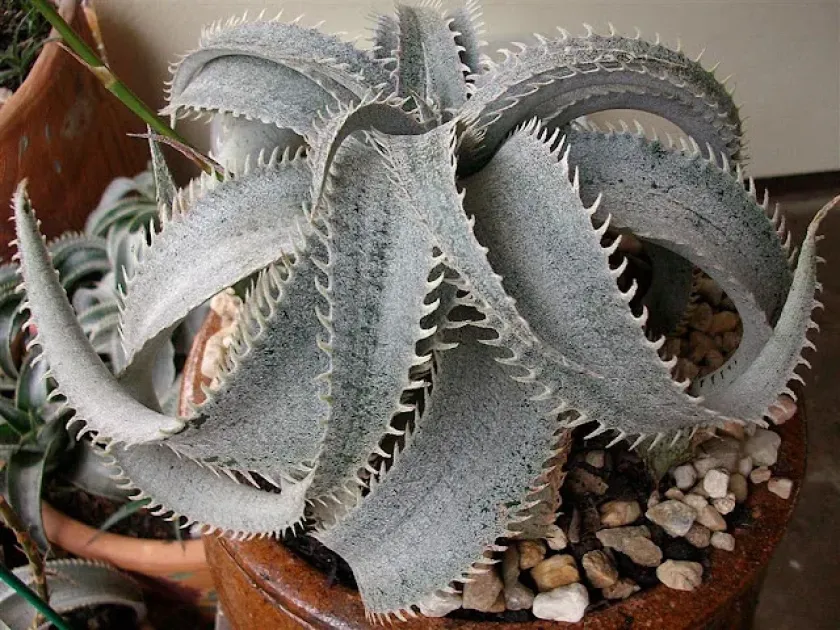
Dyckia marnier-lapostollei is a distinct species within the Bromeliad family, highly valued by collectors for its compact, silvery, and heavily armored rosette structure. It originates from the rocky habitats of Brazil, where it thrives in high-light, low-moisture environments.
This species is a true xerophyte, requiring exceptionally well-draining soil to prevent root rot. A standard mix for this plant typically includes mineral components like pumice, perlite, and coarse sand, ensuring that water passes through the pot rapidly without leaving the roots in stagnant moisture.
Light intensity is the most critical factor for successful cultivation. If kept in insufficient light, the plant will lose its characteristic compact form and the silver coating on the leaves will become dull. Providing direct sunlight or high-intensity LED grow lights is essential for vibrant growth.
Watering should be approached with caution. During the active growing season, allow the soil to dry out significantly between waterings. In the winter dormant season, irrigation must be drastically reduced to mimic the plant's natural arid habitat and avoid tissue decay.
Temperature requirements are generally tolerant, but the plant performs best in a warm, ventilated environment. It should be protected from freezing temperatures, as the succulent tissues can be damaged by sudden cold snaps and excessive humidity during colder months.
Main diseases and pests
The primary threat to the health of this species is crown rot, caused by trapped moisture in the center of the leaf rosette. It is vital to avoid overhead watering and ensure that the plant is kept in an area with good air circulation to promote quick evaporation.
Mealybugs are the most common pests found on this plant, often hiding deep within the spiky leaf axils where they are difficult to reach. Systematic application of insecticides or manual cleaning with isopropyl alcohol on a swab is often required for effective management.
Spider mites can occur if the plant is maintained in dry, hot, and stagnant air for extended periods. Monitoring for tiny webs on the underside of the leaves is a necessary routine to catch infestations before they cause significant aesthetic damage to the foliage.
Fungal leaf spot diseases may appear if the ambient humidity is too high combined with poor ventilation. Maintaining a dry environment and isolating any affected plants is crucial to prevent the spread of spores to other specimens in the collection.
Over-fertilization can result in weak, lush growth that is less resistant to pest attacks and mechanical damage. It is recommended to use a balanced, low-nitrogen fertilizer diluted to half-strength only during the peak growing season to maintain natural hardiness.