
Deuterocohnia chrysantha
Deuterocohnia chrysantha
Description
Growing requirements
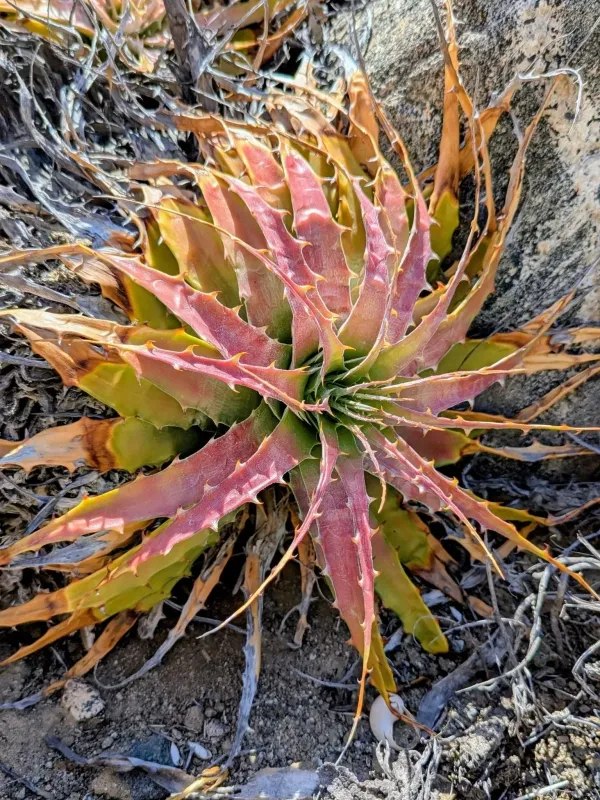
Deuterocohnia chrysantha is a specialized succulent plant belonging to the Bromeliad (Bromeliaceae) family. Unlike its tropical cousins, this species is terrestrial and thrives in arid environments, forming dense, spherical, or cushion-like mounds of succulent, spine-tipped leaves that can grow into impressive, large-scale colonies.
The native distribution of this plant includes the high-altitude, semi-arid regions of Argentina and Bolivia. Adapted to extreme solar radiation and rocky terrain, it has evolved to extract moisture efficiently from infrequent rainfall and mineral-rich, stony soils that offer excellent drainage.
Cultivation requirements necessitate a high-light environment. To maintain its compact, dense structure, the plant requires direct sunlight for the majority of the day. Without sufficient light, the plant will become etiolated, losing its structural integrity and the aesthetic value for which it is cultivated.
Soil composition must mimic the rocky natural habitat. A fast-draining mineral mix consisting of inorganic components such as pumice, perlite, or coarse gravel is essential. Any potting media that retains excessive moisture or lacks porosity will inevitably lead to root system failure.
Regarding agricultural practices, water should be applied with caution. During the growing season, a soak-and-dry method is recommended, ensuring that the roots are not left in stagnant water. In winter, the plant undergoes a dormant phase and requires almost complete dryness to survive and prepare for the next season.
Main diseases and pests
The primary threats to Deuterocohnia chrysantha involve fungal pathogens stimulated by high ambient humidity and poor ventilation. Excessive water retention in the substrate leads to crown rot, which can quickly spread through the dense leaf clusters, often resulting in the loss of the plant.
Pest management should focus on monitoring for sap-sucking insects. The mealybug is a particularly difficult pest due to its ability to hide in the deep, narrow axils of the leaves, where they feed and reproduce protected by the plant's dense architecture.
Spider mites are another common challenge, especially in enclosed environments with low humidity. These pests can cause significant damage to the leaf surface, leading to scarring and weakening the plant's overall vitality, making it more susceptible to opportunistic diseases.
Integrated pest management (IPM) is the most effective approach. This includes regular inspection, maintaining optimal airflow to prevent moisture accumulation, and the targeted use of systemic insecticides or miticides when infestations are identified early.
Prevention is the best strategy for long-term cultivation. By keeping the plant in a well-ventilated location, avoiding overhead watering that traps moisture in the rosettes, and maintaining a strict, dry-cycle-focused irrigation schedule, the risk of disease and pest infestation is minimized significantly.