
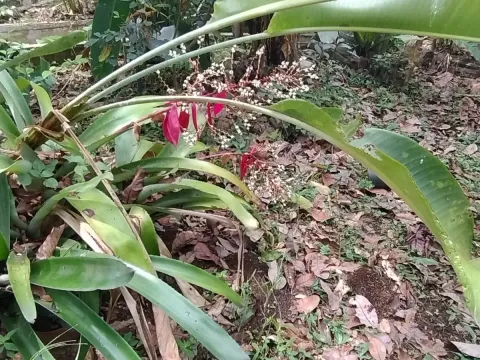
Aechmea servitensis
Aechmea servitensis
Aechmea servitensis is an epiphytic plant belonging to the Bromeliaceae family. In its natural habitat, it grows in the tropical forests of South America, preferring diffused light and high atmospheric humidity.
What the section contains
Aechmea servitensis
For successful cultivation, it is necessary to maintain a stable temperature range between 20 and 25 degrees Celsius. The plant is highly sensitive to sudden temperature fluctuations and drafts, which can cause significant growth stunting.
The soil substrate must be loose, aerated, and have a slightly acidic pH. It is optimal to use mixtures based on pine bark, peat, and charcoal to ensure efficient root drainage.
Irrigation should be carried out directly into the leaf rosette, which acts as a natural reservoir for moisture and nutrients. It is crucial to use only soft, settled water at room temperature to prevent the buildup of salt deposits.
During the active growth period, the crop requires regular feeding with complex mineral fertilizers containing low nitrogen levels, applied at half the concentration recommended on the packaging.
The primary threats to this crop include scale insects and mealybugs, which infest the leaf blades and the base of the rosette, sap-sucking from the plant tissues.
If moisture stagnates within the substrate or the rosette itself, fungal diseases such as fusarium wilt or root rot can develop, leading to rapid death of the root system.
To control pests, systemic insecticides are applied either locally to the infestation sites or added to the irrigation water, providing protection throughout the plant structure.
Disease prevention involves adhering strictly to irrigation schedules and ensuring proper room ventilation, which discourages the growth of harmful pathogens.
Regular inspection of the underside of the leaves and the axils of the rosette allows for the identification of pest hotspots at early stages, minimizing damage to the plant's aesthetic value.