
Brocchinia
Brocchinia
Brocchinia is a genus belonging to the Bromeliad (Bromeliaceae) family, consisting mainly of tropical plants. In the wild, they are primarily found in Venezuela, Guyana, and Brazil, growing on sandy soils or as epiphytes within specific tepui ecosystems.
What the section contains


Brocchinia
The plant requires high air humidity and stable temperature conditions typical of a tropical climate. In cultivation, it is necessary to maintain temperatures between 20 and 28 degrees Celsius, avoiding sudden temperature fluctuations that can hinder the development of the root system.
The soil for Brocchinia must be extremely permeable, acidic, and nutrient-poor. Substrates based on peat, conifer bark, and perlite are ideal, ensuring rapid water drainage to prevent the base of the rosette from rotting.
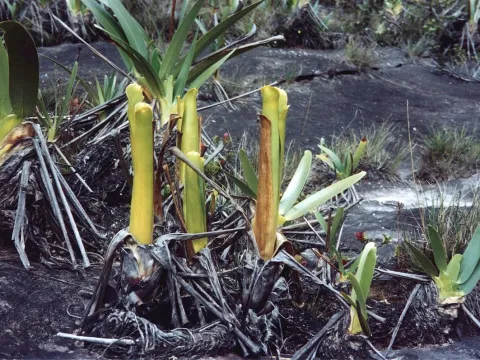
A key botanical feature is the capability of some species, such as Brocchinia reducta, to be carnivorous. Their narrow, funnel-shaped leaves form a reservoir that collects rainwater, which attracts insects with its scent and ultraviolet luminescence, after which they are digested by enzymes.
Agronomic practices require placing plants in conditions of bright but diffused light. If light is insufficient, the plants will become leggy and lose their ornamental appearance; conversely, direct sunlight can cause leaf burns, especially if air humidity is low.
The primary pests for this crop in controlled environments are spider mites and mealybugs. These pests attack the delicate leaf tissues, sucking out the sap and creating a favorable environment for secondary infections.
Fungal diseases, such as root and stem rot, develop mainly due to water stagnation in the substrate. It is crucial to maintain a proper watering regime by directing water into the leaf rosette while avoiding excessive saturation of the soil.