
Aechmea mexicana
Aechmea mexicana
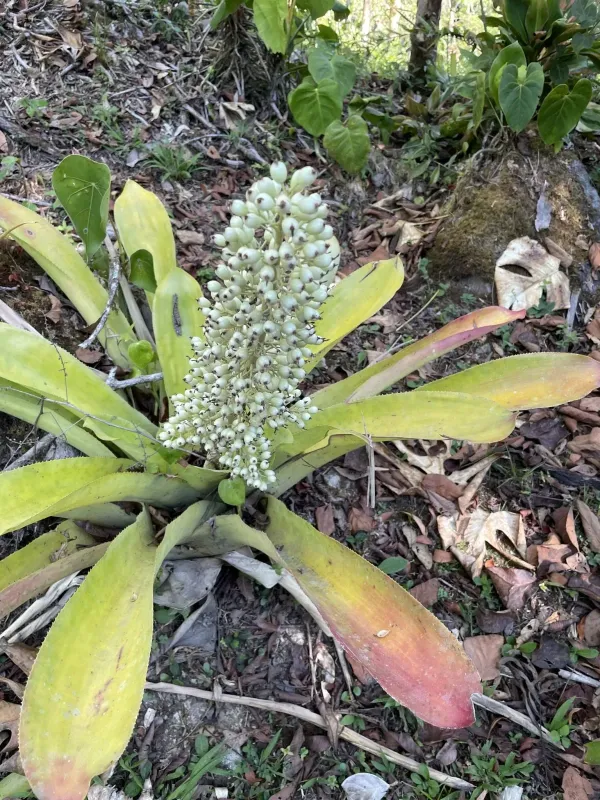
Description
Growing requirements
Aechmea mexicana is a striking epiphytic perennial belonging to the Bromeliad family, native to the humid tropical forests of Central America. In its natural habitat, it thrives by attaching itself to tree trunks, using them as support while gathering nutrients from organic debris and atmospheric moisture.
Botanically, the plant features a rigid, rosette-forming structure characterized by wide, sword-like leaves. These leaves are designed to channel water into a central tank, an evolutionary adaptation that allows the plant to survive periods of drought by maintaining its own internal water reservoir.
To cultivate Aechmea mexicana successfully, one must provide bright, indirect sunlight. Exposure to harsh direct rays can lead to leaf scorching, while insufficient light will hinder the plant's ability to bloom and maintain its robust, structural appearance throughout its life cycle.
The substrate must be light, airy, and well-draining, mimicking the natural environment of an epiphyte. A mixture of pine bark, perlite, and peat moss is highly recommended to ensure adequate oxygen flow to the roots and prevent the dense root system from suffering due to waterlogged conditions.
Temperature and humidity are critical parameters. The plant prefers consistent tropical temperatures ranging between +20 and +28 degrees Celsius. Regular misting or the use of a humidifier is essential, especially in indoor environments where heating systems significantly reduce the ambient humidity levels.
Main diseases and pests
Aechmea mexicana is susceptible to common houseplant pests, particularly scale insects and mealybugs. These pests tend to hide in the crevices of the leaf rosette and at the base of the leaves, making them difficult to detect and eradicate without thorough inspection and targeted cleaning.
Pathogenic threats are usually associated with improper watering practices. Over-saturation of the substrate or allowing stagnant water to remain in the central tank for too long during cool weather can promote fungal infections, which manifest as soft, dark spots on the foliage and base rot.