
Aechmea weilbachii
Aechmea weilbachii
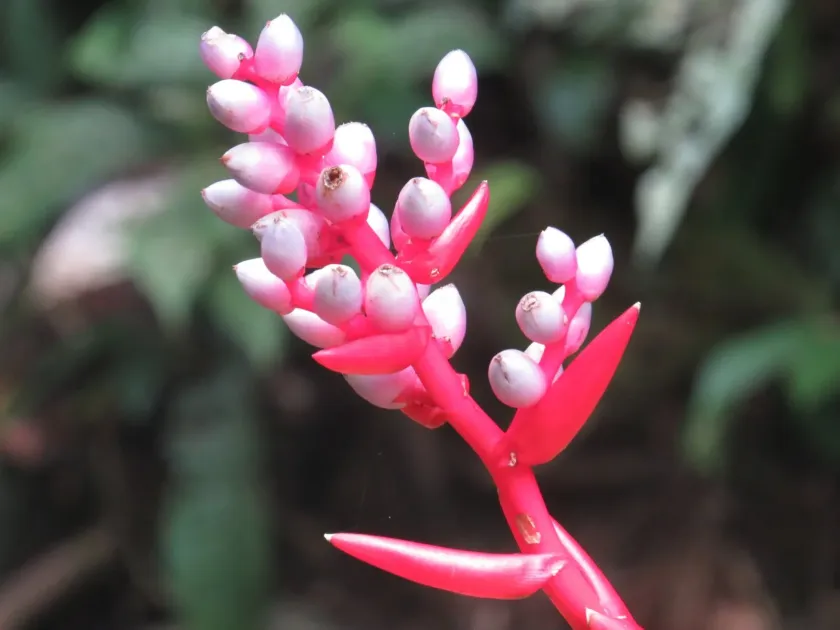
Description
Sowing dates
Aechmea weilbachii is a member of the Bromeliad family and is primarily propagated vegetatively in horticultural practice. Offsets, known as pups, should be removed from the mother plant once they have reached about one-third the size of the parent.
Propagation is most successful during the spring season. The offsets are planted in a well-draining, peat-based potting mix, ensuring the base is not buried too deeply to prevent rot.
Seed propagation is possible but less common in general cultivation due to the specific conditions required for germination. Seeds should be sown on a sterile, moist medium under greenhouse conditions.
Regardless of the propagation method, maintaining high humidity is crucial for young plants. A covering of clear plastic or glass can help maintain a stable environment until the plants establish their own root systems.
Choosing the right container is essential; shallow pots are often preferred for bromeliads as they have limited root systems and require frequent drying cycles between waterings to stay healthy.
Growing requirements
Native to the tropical forests of Brazil, Aechmea weilbachii thrives in warm, humid conditions. It requires an ambient temperature range of 20°C to 25°C throughout the year for optimal growth.
The plant requires bright, filtered light. While it is tolerant of shade, sufficient light is necessary for the development of its vibrant foliage and the eventual production of its characteristic inflorescence.
Watering techniques are specific to bromeliads; water should be poured into the central vase or tank of the plant. It is important to flush this tank regularly to prevent the buildup of salts and stagnant water.
Soil requirements focus on extreme drainage. A mixture containing perlite, orchid bark, and peat moss is highly recommended to prevent the roots from remaining wet for too long.
Fertilizer should be applied sparingly, ideally as a foliar spray or diluted in the water used for the central tank. Excessive fertilization can result in weak, rapid growth that makes the plant more susceptible to diseases.
Main diseases and pests
Scale insects are a common pest that can infest the leaves of Aechmea weilbachii. These pests are best removed manually with a cotton swab dipped in isopropyl alcohol for mild infestations.
Spider mites are likely to appear if the relative humidity is kept too low for an extended period. Regular misting and maintaining proper air circulation are key preventative measures.
Fungal rots are the most significant threat to this species, usually caused by overwatering or poor drainage. Infected plants often show signs of dark, soft tissue at the base of the leaves.
Mealybugs tend to hide in the tight spaces where the leaves meet the central tank. Systemic insecticides or neem oil are effective treatments for managing significant outbreaks.
Root system decline occurs when the potting substrate breaks down and loses its aeration. Annual or biennial repotting is advised to maintain a fresh, oxygenated growing environment for the roots.