
Aechmea hybrids
Aechmea hybrids
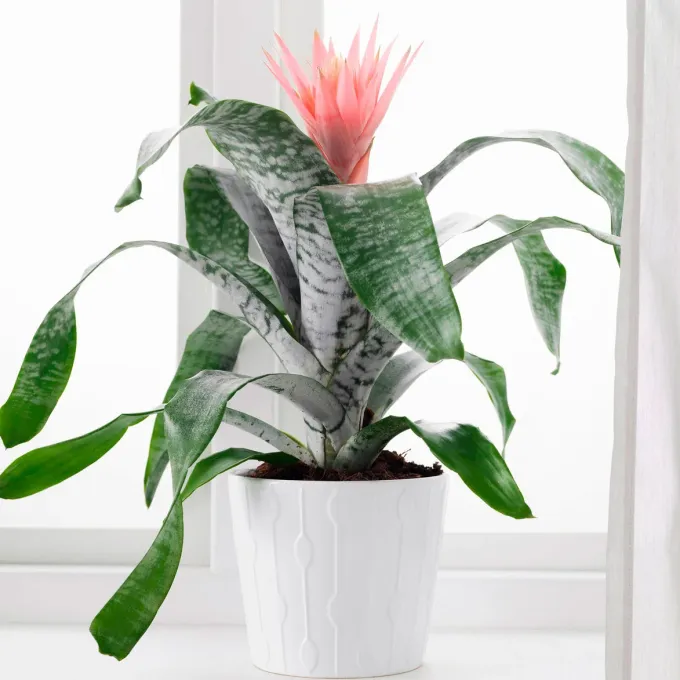
Description
Growing requirements
Aechmea hybrids belong to the Bromeliad family and are popular ornamental plants known for their striking inflorescences. They originate from the tropical regions of Central and South America, where they typically grow as epiphytes on trees or rocks.
These plants require bright, indirect light to thrive and bloom. Direct sunlight can scorch their leaves, so placing them in a well-lit area away from harsh midday sun is essential for maintaining their vibrant color and healthy appearance.
The ideal temperature for these hybrids ranges between 20 and 25 degrees Celsius during the growing season. A slight drop in temperature during the winter months helps the plant settle into a dormant phase, which is crucial for triggering future flowering.
A loose, well-draining substrate is vital for Aechmea. A mix consisting of peat moss, pine bark, and perlite works best, ensuring the roots have access to oxygen while avoiding the waterlogging that often leads to root degradation.
Watering is unique for this species; water should be poured directly into the central cup, or rosette, of the plant. It is important to keep the cup partially filled with clean water, but ensure the soil stays only moderately moist, never soggy.
Main diseases and pests
Common pests affecting Aechmea hybrids include scale insects and mealybugs, which hide in the leaf axils. Regular inspections are necessary to catch infestations early, as these pests can weaken the plant by sucking its sap.
Fungal diseases like root rot and leaf spot are typically caused by overwatering or poor air circulation. To prevent these issues, ensure the growing environment has good ventilation and avoid getting water trapped in the base of the leaves for too long.
Spider mites can also become a problem in environments with low humidity. Maintaining appropriate moisture levels around the plant through occasional misting or using a humidifier can help discourage these pests from settling on the foliage.
If the plant shows signs of browning leaves or soft roots, immediate corrective action is needed. Repotting into fresh, sterile substrate and trimming away affected root tissue is often the only way to save a plant suffering from severe rot.
Always use room-temperature, filtered, or rainwater for irrigation. Hard water containing high levels of calcium can leave mineral deposits on the foliage and interfere with the plant's natural ability to absorb nutrients and moisture efficiently.