
Aechmea blumenavii
Aechmea blumenavii
Description
Growing requirements
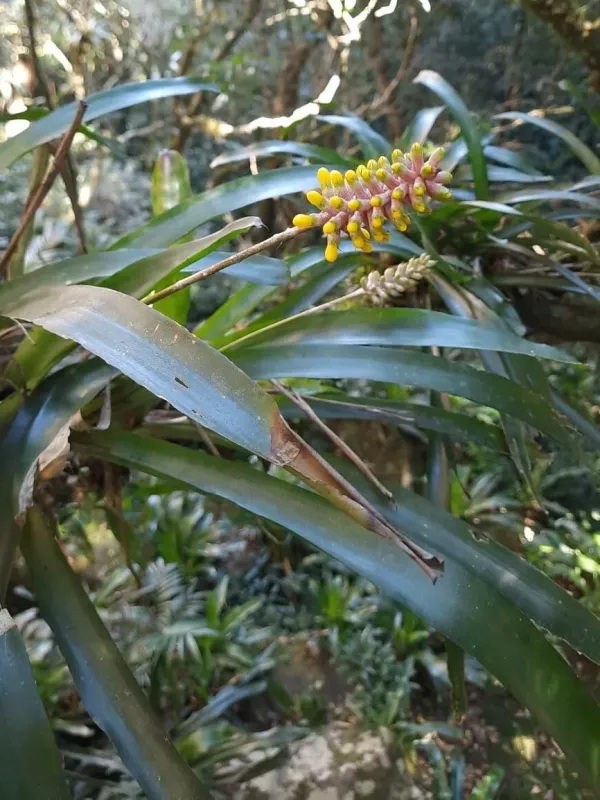
Aechmea blumenavii is a fascinating perennial species belonging to the Bromeliaceae family. Originating from the tropical rainforests of Brazil, this plant has adapted to survive in environments where it grows as an epiphyte, deriving moisture and nutrients from the air and decaying debris trapped in its foliage.
Botanically, it forms a tight rosette of stiff, leathery leaves that create a central tank. This unique structure is essential for the plant's water collection system. During the growing season, the plant produces attractive inflorescences that contribute to its high ornamental value in indoor and greenhouse collections.
Light requirements for this species include bright, indirect sunlight. While it can tolerate some lower light conditions, consistent access to filtered sunlight ensures more vibrant coloration and prevents the foliage from becoming overly elongated. Protecting the plant from harsh afternoon sun is crucial to avoid leaf burn.
The substrate must prioritize drainage and aeration. A mix specifically formulated for epiphytic plants, consisting of orchid bark, peat moss, perlite, and a small amount of charcoal, is ideal. This mixture prevents the roots from sitting in stagnant water, which is a major risk factor for plant health.
Temperature management should aim for a range between 20°C and 25°C. The plant thrives in high humidity levels. Regular misting with distilled or soft water is highly beneficial, as it mimics the natural tropical moisture levels and keeps the foliage clean and healthy.
Main diseases and pests
Mealybugs are a common pest for Aechmea blumenavii, typically congregating in the leaf axils. These small, cotton-like insects can weaken the plant by feeding on its sap. Manual removal combined with the application of horticultural oils or systemic insecticides is generally effective for control.
Scale insects present another significant threat, appearing as small, brown, hard bumps on the leaf surfaces. They are difficult to detect at early stages, so routine inspection of the plant's foliage, especially the underside, is recommended to catch infestations before they spread.
Root rot is the most common physiological disorder, usually caused by overwatering or poor drainage. Once the roots begin to decay, the entire plant structure weakens, leading to rapid deterioration. If discovered early, repotting in fresh, dry medium and reducing watering frequency can help save the specimen.
Spider mites may affect the plant in dry environments with poor air circulation. They cause fine webbing and stippling on the leaves. Increasing ambient humidity and ensuring proper airflow are simple yet effective strategies to prevent spider mite colonization and maintain leaf health.
Fungal infections, such as leaf spot, can occur if water sits on the leaves for too long in cool or poorly ventilated conditions. Keeping the crown area clean and ensuring the environment is well-ventilated helps prevent these pathogens from establishing a foothold on the plant.