
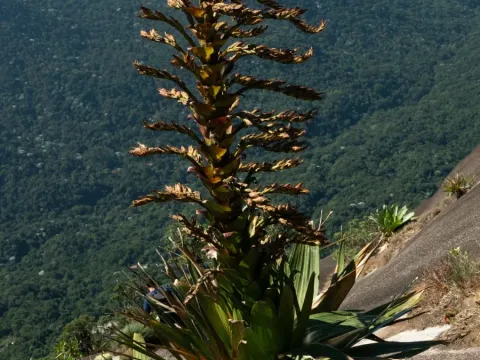
Alcantarea
Alcantarea
Alcantarea is a genus of large, perennial plants belonging to the Bromeliaceae family. Native to the rocky mountain regions of Brazil, these plants have evolved to survive in nutrient-poor but well-drained environments, displaying remarkable resilience as lithophytes or epiphytes.
What the section contains


Alcantarea
Success in cultivating these plants requires intense, bright light to maintain their structural integrity and leaf coloration. While they can tolerate some direct sunlight, afternoon shade is recommended in warmer climates to prevent foliar scorching and dehydration.
The planting medium must be highly porous and well-draining. A specialized mix consisting of orchid bark, perlite, and high-quality peat moss is ideal to facilitate root aeration and prevent the waterlogging that often leads to physiological collapse in bromeliads.
Watering techniques are specific to the tank-forming nature of the species. Water should be poured into the central tank, ensuring that it remains clean. During the dormant winter phase, the central reservoir should be kept nearly dry to prevent freezing and rot.
Temperature management is crucial, as Alcantarea thrives in moderate to warm environments between 20 and 28 degrees Celsius. They require stable conditions and protection from cold drafts, making them excellent candidates for greenhouses or large, well-lit interiors in temperate zones.
Pest pressures primarily include mealybugs and scale insects. These pests often congregate in the tight crevices of the leaf bases, where they are protected from topical treatments, necessitating the use of systemic insecticides or careful manual removal.
Fungal pathogens represent the most significant threat to the root system and the base of the rosette. Overwatering or poor air circulation creates an anaerobic environment that fosters rot; therefore, maintaining high humidity without stagnant water in the substrate is essential.