
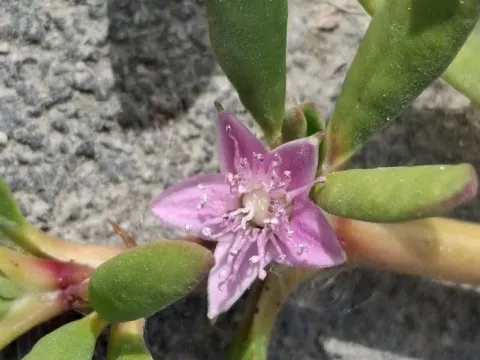
Sesuvium
Sesuvium
Sesuvium belongs to the Aizoaceae family, a group of succulent plants known for their resilience. It is widely recognized as a halophyte, an organism that thrives in high-salt environments. For successful cultivation, seeds should be sown in a warm, well-draining substrate during the peak growing season.
What the section contains


Sesuvium
The seeds are small and require light for optimal germination, so they should be sown on the surface and pressed gently into the soil. Maintaining a warm temperature, ideally between 20°C and 25°C, is crucial for consistent sprouting.
Vegetative propagation via cuttings is perhaps the most efficient method for commercial setups. Stems root rapidly when placed in sandy, moist soil or even water, allowing for quick expansion of the cultivation area.
When starting seedlings, avoid overcrowding to ensure adequate air circulation. This helps prevent damping-off diseases that can occur in the high-humidity environments required for initial growth.
Spacing should be managed based on the final use of the crop. For ground cover applications, plants can be spaced widely to allow for rapid creeping, whereas culinary production benefits from tighter spacing to maximize the yield of tender stems.
As a true halophyte, Sesuvium possesses the unique ability to tolerate high salinity levels. It is an excellent candidate for agricultural land that has been degraded by salt accumulation, effectively reclaiming such sites.
Full sun exposure is non-negotiable for this plant. In shady conditions, the stems tend to lose their succulence and vitality, resulting in poor growth and a significant reduction in the quality of the harvestable biomass.
While highly drought-tolerant, Sesuvium yields best when provided with regular moisture. It is capable of utilizing brackish or saline water, making it a sustainable crop in coastal regions where fresh water resources are limited.
The soil should be loose and sandy to ensure good aeration. Compaction is the primary enemy of Sesuvium, as it restricts root development and increases the risk of waterlogging, which the plant does not tolerate well.
Temperature is a key limiting factor. Sesuvium is strictly a warm-weather plant and cannot survive freezing temperatures. It is best suited for tropical and subtropical climates where it can grow vigorously throughout the year.
The yield of Sesuvium is highly impressive due to its rapid growth rate. In optimal conditions, farmers can harvest multiple cuts throughout a single season, as the plant regenerates quickly after pruning.
Nitrogen applications can boost biomass production, but moderate fertilization is usually sufficient. Because it grows in saline environments, the plant often acquires sufficient minerals directly from the soil and water it inhabits.
Regular harvesting acts as a pruning mechanism, encouraging the plant to become bushier and denser. This improves the overall output of tender shoots, which are the primary part of the plant sold for culinary use.
For long-term production, it is recommended to maintain the plantation by periodic weeding and light soil cultivation to keep the surface loose. A well-managed bed can be productive for several consecutive years.
Yield management also involves controlling the flowering stage. If the plant is allowed to go to seed, its vegetative growth slows down significantly, so harvest timing is key to maintaining high vegetable output.
Sesuvium is remarkably resistant to most common crop diseases, thanks in part to its specialized biology and high salt content. However, like all crops, it requires attention to environmental management to remain healthy.
Root rot is the most common threat, usually triggered by poor drainage or overwatering. If the soil remains saturated for too long, the succulent tissues become susceptible to fungal pathogens that can collapse the plant.
Pests are generally few, though mealybugs and aphids can occasionally appear in enclosed or poorly ventilated environments. These insects target the soft, growing tips of the stems, sucking the sap and weakening the plant.
Disease management should focus on prevention rather than chemical intervention. Providing adequate sunlight and good air movement around the foliage is usually sufficient to discourage the development of pests and pathogens.
Given its status as a potential food crop, the use of pesticides is strongly discouraged. Integrated pest management, centered on maintaining a clean and optimal growing environment, is the best approach for this culture.
Harvesting consists of clipping the top 10–15 cm of the stems. This region is the most tender and contains the ideal balance of moisture and nutrients, making it perfect for raw or cooked consumption.
Timing the harvest for the early morning is recommended to ensure the highest water content in the tissues. This helps the harvested product stay crisp and fresh during packaging and transport to the market.
After clipping, the shoots should be sorted to remove any woody or discolored portions. The produce should be stored in cool conditions with high humidity to prevent wilting before it reaches the consumer.
As a forage crop, harvesting can be done with larger equipment, cutting back the plants to encourage regrowth. This makes it a viable and low-input source of nutrition for livestock in challenging coastal climates.
Sustainable harvesting involves leaving enough of the plant structure to allow for rapid recovery. By rotating harvest areas, a farm can ensure a continuous supply of fresh produce throughout the active growth period.