
Sea purslane
Sesuvium maritimum
Description
Growing requirements
Sea purslane (Sesuvium maritimum) is a succulent herb belonging to the Aizoaceae family. It is a highly specialized halophyte that thrives in sandy coastal environments, showing remarkable endurance in soils with high salt content that would be toxic to conventional crops.
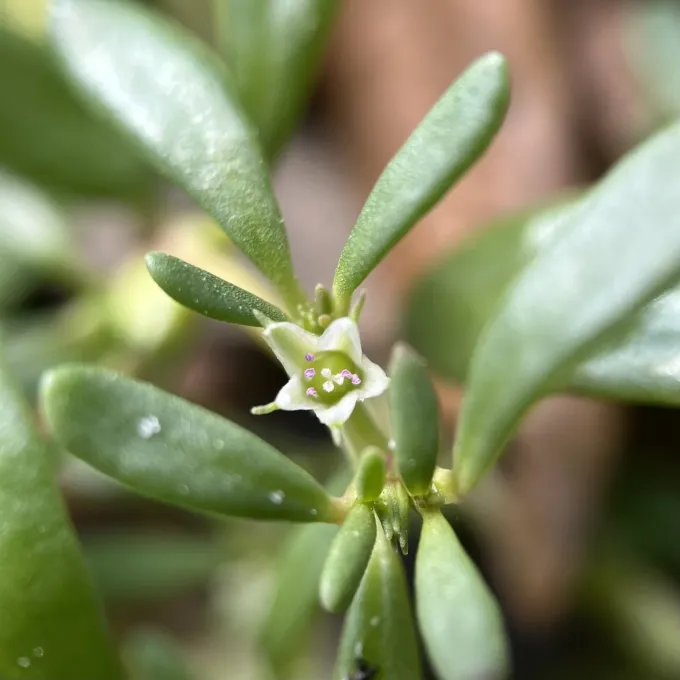
The plant is native to maritime regions and coastal dunes, where it plays a key role in soil stabilization. Botanically, it is characterized by fleshy, succulent leaves that store water and minerals, allowing the plant to survive in saline environments with intermittent water supply.
Successful cultivation requires full sun exposure and a well-drained, sandy-textured substrate. While it is remarkably salt-tolerant, optimal growth is observed when moisture levels are consistent, as the succulent tissues benefit from a steady supply of minerals provided by brackish irrigation.
Temperature requirements are high, as the plant originates from tropical and subtropical coastal zones. It does not tolerate prolonged frost, meaning that commercial cultivation should be prioritized in regions with stable, warm climates throughout the vegetative period.
Agricultural management requires careful monitoring of substrate salinity and drainage. Excessive watering without sufficient drainage can lead to hypoxia in the root zone, negatively affecting the plant's succulent nature and its overall biomass production capacity.
Harvesting
The primary use of this crop is as a forage resource in coastal farming, as well as an ornamental or ecological tool for phytoremediation of salt-affected lands. Its high mineral content makes it an interesting focus for specialized animal diet formulations.
Harvesting is typically done by mechanical cutting of the aerial biomass during the peak vegetative stage. This promotes secondary growth from the basal nodes, allowing farmers to obtain multiple cuts throughout the growing season, provided that the soil nutrient balance is maintained.