
Stomatium
Stomatium
Description
Growing requirements
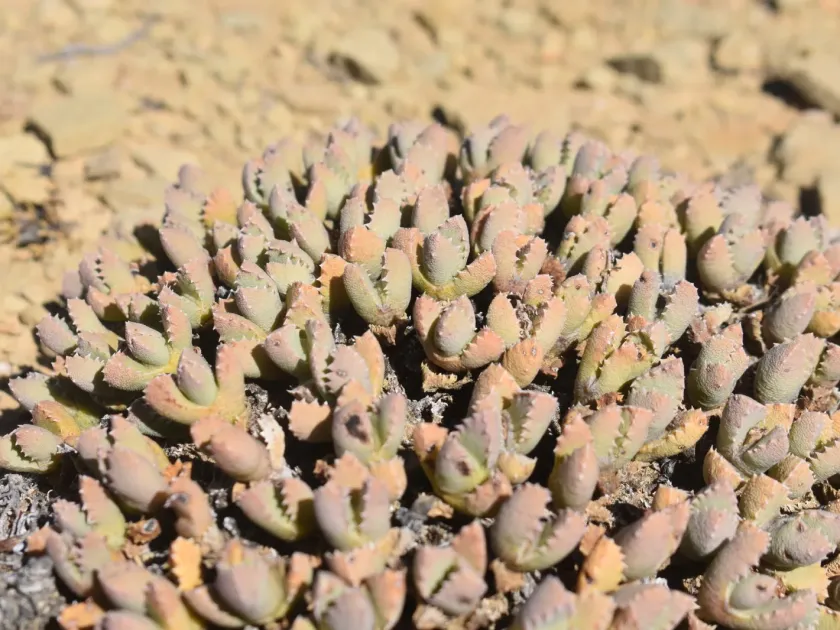
Stomatium is a genus of small, clustering succulent plants belonging to the Aizoaceae family. These plants are native to the arid regions of South Africa, specifically the Cape provinces, where they thrive in rocky substrates and harsh environmental conditions.
The botanical structure of Stomatium is defined by its fleshy, often toothed leaves arranged in compact rosettes. These leaves have evolved to store water efficiently, allowing the plant to survive prolonged periods of drought in its natural habitat.
To successfully cultivate this species, it is essential to provide intense sunlight. In indoor settings, these plants require the brightest available location, such as a south-facing windowsill, to maintain their natural growth pattern and prevent etiolation.
The soil requirements are strict: the substrate must be highly porous and inorganic. A standard mix for Stomatium typically includes pumice, coarse sand, and a minimal amount of organic matter, which ensures rapid drainage and prevents water retention near the root system.
Temperature management is vital throughout the year. During the active growing season, standard room temperatures are appropriate, but the plant requires a marked drop in temperature during winter months to induce dormancy, which is crucial for subsequent flowering.
Main diseases and pests
The most significant threat to Stomatium is overwatering, which quickly leads to root rot and collar decay. Once the root system is compromised by excessive moisture, the plant is often difficult to save due to the rapid spread of fungal pathogens.
Pest management involves regular monitoring for common succulent invaders such as mealybugs and aphids. These insects often cluster in the deep recesses between the leaves, requiring precise application of contact or systemic pesticides to prevent severe damage to the rosettes.