
Rhinephyllum
Rhinephyllum
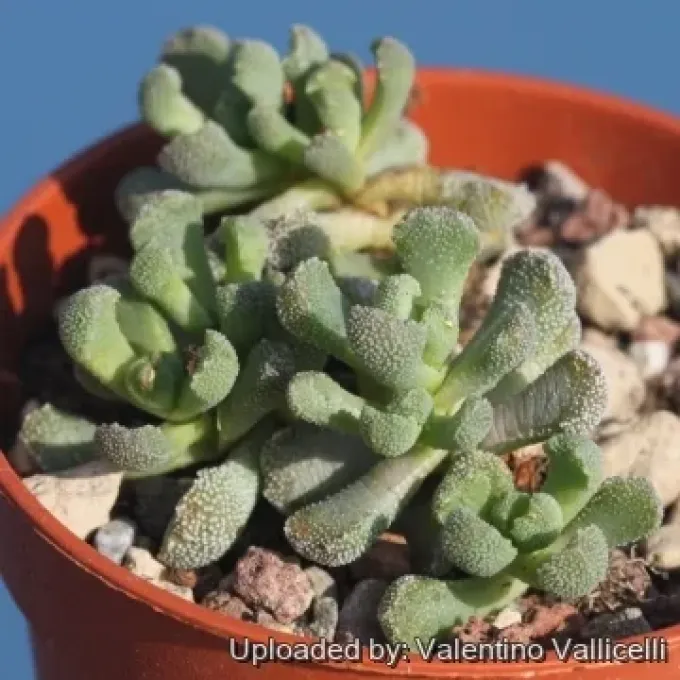
Description
Growing requirements
Rhinephyllum is a genus of succulent plants belonging to the Aizoaceae family. These plants are recognized for their compact, lithophytic nature, which allows them to thrive in harsh environments by mimicking the surrounding rocky landscape.
The native range of this culture is restricted to arid regions of South Africa, particularly the Karoo. They have evolved to withstand extreme temperature fluctuations and long periods of drought, making them highly specialized botanical subjects.
For successful cultivation, Rhinephyllum requires high light intensity throughout the year. Direct exposure to sunlight is crucial to maintain its characteristic structure; insufficient lighting often results in etiolation and structural weakness.
Soil requirements are strictly mineral-based. A mixture comprising coarse sand, grit, perlite, and a very small portion of inorganic soil is necessary to ensure rapid drainage. Any organic matter should be kept to a minimum to avoid soil compaction.
Watering practices should follow the plant's natural dormant cycle. During the growing season, water sparingly, allowing the substrate to dry completely between applications. During winter dormancy, keep the plant almost entirely dry to prevent physiological stress.
Main diseases and pests
The primary threat to Rhinephyllum health is overwatering, which facilitates rapid fungal and bacterial rot of the roots and stems. In many cases, root rot is irreversible once the internal tissues begin to decay.
Common pests include mealybugs and spider mites. Mealybugs often hide in the tight crevices between leaves, making them difficult to detect. Spider mites may become an issue if the ambient air is excessively dry for a prolonged period.
Preventative care involves excellent air circulation, which helps manage humidity levels and keeps the leaf surface dry. Avoid spraying water directly onto the leaves to reduce the risk of mold and fungal infections.
Chemical control should be applied with caution. Systemic pesticides can be effective against mealybugs, but one must ensure the dosage is appropriate for succulents, as these plants can be sensitive to heavy chemical applications.
Monitoring the plant's base for any discoloration or softening is a vital aspect of routine care. Early identification of issues allows for emergency intervention, such as re-rooting or removing damaged plant parts.