
Psilocaulon
Psilocaulon
Psilocaulon is a genus of succulent plants belonging to the Aizoaceae family. These plants are well-adapted to arid environments, possessing specialized physiological mechanisms to survive in harsh, water-scarce conditions.
What the section contains

Psilocaulon
The origin of this culture is primarily associated with the dry regions of Southern Africa. As typical halophytes, these plants naturally thrive in saline soils, demonstrating exceptional tolerance to high mineral content in the substrate.
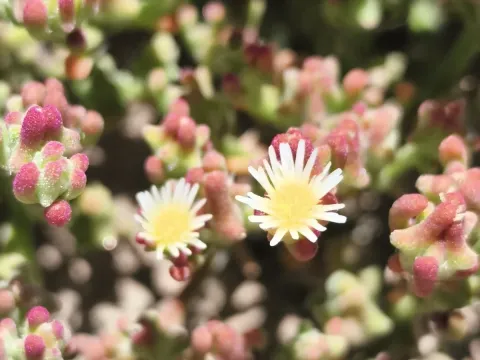
Botanically, Psilocaulon is characterized by its branched, succulent, often knobby stems. The leaves are typically reduced or ephemeral, which serves as a crucial adaptation to minimize transpiration and water loss in desert climates.
For successful cultivation, the plants require full sun exposure and a highly permeable, well-draining soil mix. Excellent drainage is non-negotiable, as waterlogging can quickly lead to root rot and total plant failure.
In terms of agricultural use, Psilocaulon has historically been valued for its high mineral content, particularly in the production of soda ash. Modern applications explore its potential in the remediation of saline soils in arid agricultural zones.
The most significant threat to Psilocaulon is fungal pathogens, which thrive when the soil moisture levels are too high. Root and stem rot are the primary causes of death for indoor and nursery-grown plants.
Pests that frequently infest these succulents include mealybugs and spider mites. These pests tend to multiply rapidly in environments with poor airflow and inadequate ventilation, necessitating constant monitoring.
Improper temperature control, especially when combined with high humidity, renders the plant highly susceptible to pathogens. Maintaining a dry, well-ventilated environment is essential for preventing these issues.
Chemical control measures should be approached with caution. Only specific insecticides and systemic fungicides suitable for succulents should be applied to avoid damaging the plant's delicate cuticle.
A preventative approach is most effective, prioritizing proper drainage, adequate sunlight, and restricted watering regimes during the plant's dormant cycle to ensure long-term vigor and resistance to diseases.