
Sesuvium verrucosum
Sesuvium verrucosum
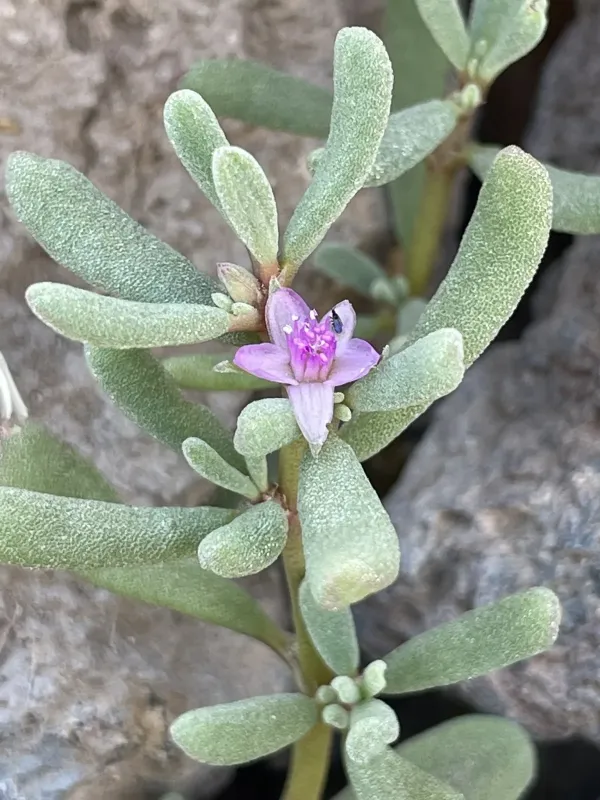
Description
Growing requirements
Sesuvium verrucosum, commonly known as a type of sea purslane, is a succulent perennial plant belonging to the Aizoaceae family. It is a specialized halophyte, naturally adapted to thrive in saline environments, such as coastal flats, salt marshes, and inland saline depressions.
The plant possesses unique physiological mechanisms to handle high salinity, which would be lethal to standard agricultural crops. It accumulates salts in its succulent leaves and stems, allowing it to maintain turgor pressure and continue photosynthesis even in high-sodium soils.
Optimal growth conditions for Sesuvium verrucosum include full solar exposure and warm climatic conditions. It thrives in environments where temperatures range between 20°C and 35°C, making it particularly suitable for arid and semi-arid regions with high solar radiation.
Regarding soil requirements, the plant is versatile but prefers well-drained, porous soils. While it can withstand periods of temporary waterlogging, maintaining good soil aeration is essential for robust root development and long-term plant health.
Agronomic management involves maintaining a consistent level of soil salinity through irrigation. Unlike traditional crops, Sesuvium verrucosum responds positively to saline water irrigation, which is often abundant in areas where fresh water is a scarce and valuable resource.
Harvesting
The primary agricultural application for Sesuvium verrucosum is as a potential forage crop. In regions facing desertification and soil salinization, it provides a viable source of biomass for livestock feed, utilizing land that would otherwise be unproductive.
Harvesting efficiency is achieved through repeated cutting of the succulent shoots. This perennial growth habit allows farmers to obtain multiple harvests within a single growing season, maximizing the total yield of dry matter per hectare.
Timing the harvest is crucial to ensure high protein content and palatability. Shoots should be collected before the plant enters its full reproductive phase to avoid the development of woody fibers that reduce the nutritional quality of the forage.
Beyond its use as fodder, the species is increasingly studied for bioremediation projects. Its natural ability to extract and store salts from the soil profile makes it an effective tool for reclaiming agricultural lands affected by anthropogenic or natural salinization.
Post-harvest management involves proper storage or immediate processing of the biomass. Given its high mineral content, producers should integrate it into livestock diets carefully, ensuring that the mineral intake from the forage is balanced with other nutritional components.