
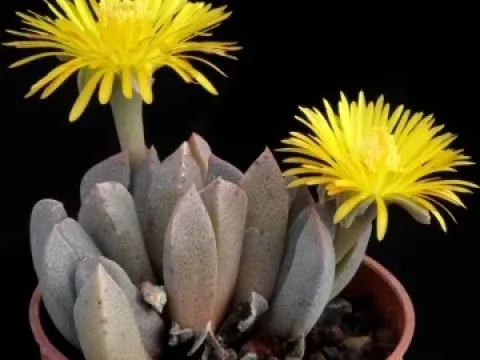
Prepodesma
Prepodesma
Prepodesma is a genus of succulent plants within the Aizoaceae family, naturally occurring in arid regions of South Africa. These plants are characterized by their compact size and fleshy, moisture-storing leaves, which are essential for survival in dry climates.
What the section contains

Prepodesma
The primary environmental requirement for Prepodesma is intense light. To maintain its natural, compact growth habit, the plant needs significant sun exposure, otherwise, it will undergo etiolation and lose its structural integrity.
Soil composition must prioritize drainage above all else. A typical growing medium for these plants consists of a high percentage of inorganic material, such as coarse sand, pumice, or perlite, mixed with a minimal amount of organic matter.
Temperature fluctuations are essential for the plant's health. It thrives in warm days and significantly cooler nights, which mimics the natural diurnal temperature variation of its native habitat and promotes healthy physiological activity.
Watering practices must be disciplined. During the growth phase, water should be applied only when the substrate has completely dried out. In the dormant period, water intake should be restricted to prevent the plant from rotting.
The most dangerous threat to Prepodesma is root rot, typically caused by excessive moisture levels in the growing medium. This condition is often fatal and difficult to reverse once symptoms appear in the plant's leaves.
Mealybugs are common pests that target the delicate crevices between the leaves. They are notoriously difficult to eradicate due to their protective wax-like coating, which renders many standard contact insecticides ineffective.
Spider mites can also be a significant issue in low-humidity environments. These pests feed on the surface cells of the succulent, creating unsightly damage and weakening the plant's overall resistance to diseases.
Maintaining proper hygiene by removing dead leaves and ensuring adequate airflow can prevent many common fungal issues. Stagnant air environments provide the perfect conditions for mold spores to colonize the plant.
Early detection is the best strategy against infestations. Monitoring the base of the plant and the undersides of the leaves periodically can ensure that any potential threats are addressed before they compromise the entire plant.