
Tetragonia echinata
Tetragonia echinata
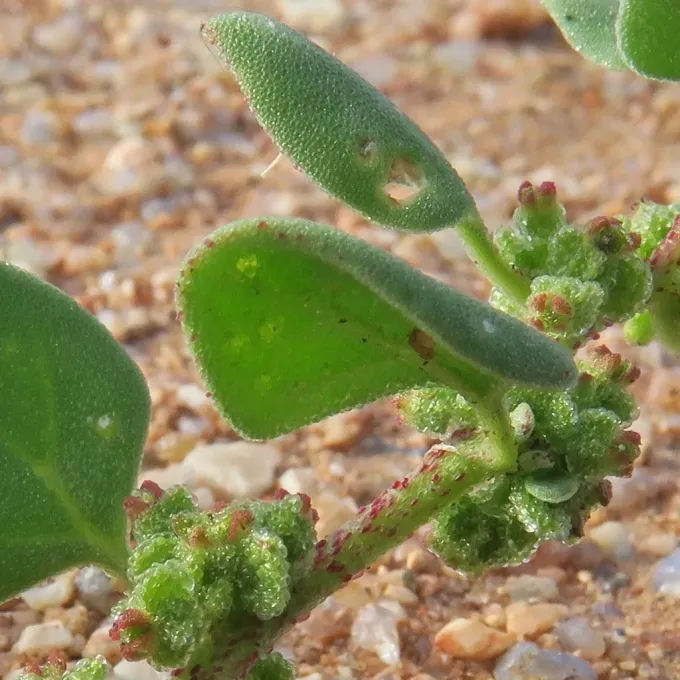
Description
Sowing dates
Tetragonia echinata, a member of the Aizoaceae family, is a drought-tolerant plant that requires specific sowing techniques. In its natural habitat, the seeds germinate after the rainy season, which dictates the strategic timing for commercial cultivation.
The optimal time for sowing is spring, when soil temperatures reach 15–20 degrees Celsius. The seeds possess a hard, protective coat; therefore, scarification or soaking in growth stimulants is recommended to improve germination rates significantly.
The sowing pattern must account for the plant's growth habit, as it forms creeping or semi-upright stems. A spacing of at least 50 centimeters between rows is advised to ensure proper airflow and to facilitate routine maintenance tasks.
Seeds should be sown at a depth of 1–2 centimeters. Surface sowing often leads to seed desiccation, while excessive depth causes germination delays due to oxygen deficiency in compacted soils. Precise depth control is critical for achieving uniform emergence.
Given the succulent nature of the plant, moderate moisture levels are required during the early growth stages. Once true leaves have fully developed, irrigation frequency should be reduced, shifting the crop to a regime of infrequent but deep watering to encourage root expansion.
Growing requirements
The crop has specific light requirements and thrives in open areas with direct sunlight. Tetragonia echinata is highly sensitive to shading, which results in leggy stems, loss of turgor, and a significant decrease in overall biomass productivity.
The soil substrate must provide excellent aeration and drainage. Light sandy or loamy soils are considered ideal, reflecting the plant's native arid environment. Waterlogging in the root zone is lethal to this species and frequently triggers rot diseases.
The plant adapts to a wide range of temperature regimes, enduring significant diurnal fluctuations. However, warm nights are essential for the healthy development of vegetative organs. The species exhibits high tolerance to saline soils, allowing for cultivation on marginal lands.
A balanced intake of micronutrients, particularly calcium and magnesium, is essential to strengthen cell walls. The application of high nitrogen doses is discouraged, as it reduces the plant's natural resilience to abiotic environmental stressors.
During the cultivation cycle, it is necessary to eliminate competition from taller weeds. Regular weeding during the first two months of the vegetation period is a mandatory practice to ensure the steady growth and development of the Tetragonia crop.
Main diseases and pests
Like most members of the Aizoaceae family, Tetragonia echinata possesses high phytosanitary resistance. However, improper agricultural management can lead to the development of various pathogens, primarily root rots caused by excessive soil moisture.
Among pests, soil nematodes pose the greatest threat by damaging the root system and causing general plant suppression. Adhering to crop rotation and using certified planting material are the most effective ways to mitigate these risks.
In high-humidity conditions, powdery mildew may occur. The initial symptoms appear as white patches on leaves, which gradually spread across the entire plant. Prevention involves thinning plant density and ensuring effective air circulation.
Aphids and spider mites may colonize young shoots during dry spells. Control measures include both biological methods (using beneficial insects) and targeted application of approved insecticides when the economic threshold of damage is reached.
A crucial aspect of plant protection is the removal of crop residues, which serve as reservoirs for infection. Following the harvesting cycle, deep plowing of the soil is recommended to destroy the overwintering sites of pests and pathogenic fungi.