
Sesuvium humifusum
Sesuvium humifusum
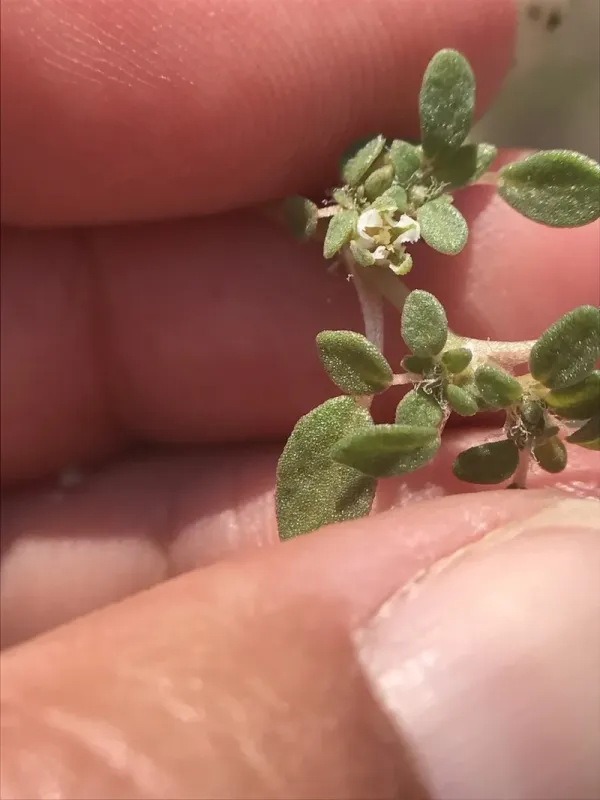
Description
Sowing dates
Sesuvium humifusum belongs to the Aizoaceae family and is recognized as a succulent, prostrate herb well-adapted to coastal and saline environments.
The plant is typically propagated via seeds or vegetative cuttings, which show excellent success rates in sandy and mineral-rich substrates.
Sowing should occur during the stable warm season, as the germination of seeds requires temperatures consistently above 22 degrees Celsius.
Due to the small size of the seeds, they should be placed on the surface or buried at a depth of no more than 1 cm to ensure adequate light exposure.
Consistent moisture is required during the initial establishment period to allow the root system to adapt to the saline soil conditions.
Growing requirements
This species is a quintessential halophyte, meaning it has evolved to thrive in soils with high concentrations of sodium and other minerals.
It demands full sunlight to maintain its succulent growth habit and to promote the accumulation of minerals in its leaves.
Soils must be porous and well-drained; heavy, water-logged clays will lead to immediate root rot and plant mortality.
The plant exhibits high tolerance to drought, utilizing its succulent tissue to store moisture throughout the dry season.
Temperature management is critical; while heat-tolerant, the plant must be protected from frost which can irreversibly damage its cell structure.
Yield
The primary use of this crop is to provide forage in arid and coastal regions where conventional grazing crops cannot survive.
Biomass production is consistent under managed irrigation, providing a reliable source of green feed for livestock in desert conditions.
Regular harvesting stimulates secondary growth, allowing for multiple cuts within a single growing cycle if nutrient availability is sufficient.
The plant’s succulent nature makes it a vital water source for animals during extreme heat, provided it is part of a balanced diet.
Beyond forage, researchers are investigating the plant’s potential as a source of biofuels and mineral-rich soil additives for land restoration.
Main diseases and pests
The most significant threat to plant health is fungal pathogens, which proliferate in environments with high humidity and poor aeration.
Insect pests, particularly mealybugs and aphids, can cause significant damage to young shoots, necessitating integrated pest management.
Competition from fast-growing weeds can choke out young plants, requiring active management during the first weeks of growth.
Over-saturation with water or sudden shifts in soil pH can disrupt the plant's delicate saline-management mechanisms, leading to chlorosis.
Strategic monitoring for signs of rot is essential, as the high water content of the stem allows infections to spread rapidly throughout the colony.
Harvesting
Harvesting is performed by clipping the succulent stems during the vegetative phase, typically just before the onset of flowering.
Clipping height is critical; leaving at least 5 cm of the stem ensures that the meristematic tissues remain intact for rapid regrowth.
Once harvested, the plant material should be processed immediately to preserve its mineral integrity and prevent rapid decay.
If not fed directly to livestock, the biomass should be dried using forced air to prevent mold development within the succulent tissues.
Efficient harvesting cycles are essential for maintaining the productivity of the plot and preventing the plant from going to seed too early.