
Sesuvium portulacastrum
Sesuvium portulacastrum
Description
Growing requirements
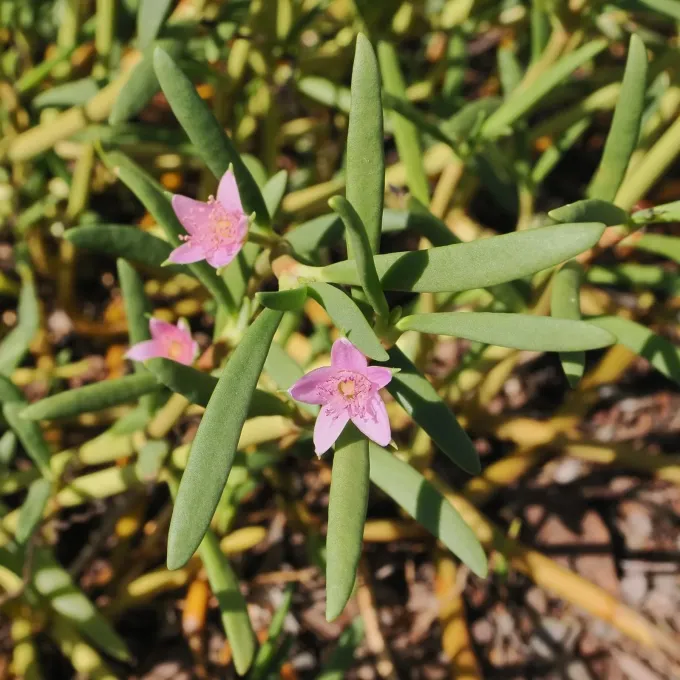
Sesuvium portulacastrum, commonly known as shore purslane or sea purslane, is a perennial succulent plant belonging to the Aizoaceae family. It is a quintessential halophyte, naturally adapted to thrive in coastal habitats such as salt marshes and sandy dunes throughout tropical and subtropical regions.
The plant features fleshy, succulent leaves and stems that store water and sequester salts, allowing it to maintain metabolic processes in environments that would be toxic to most other flora. This physiological adaptation makes it a key candidate for agricultural development in saline landscapes.
The cultural requirements for this plant focus on high light intensity and sufficient warmth. It is highly intolerant of frost, requiring frost-free environments to prevent the rupture of its succulent tissues, which are largely composed of water.
Regarding soil, Sesuvium portulacastrum is remarkably unpretentious. It thrives in loose, sandy substrates that offer excellent drainage, ensuring that roots do not remain saturated for extended periods, which is vital for preventing anaerobic stress.
Irrigation management is unique for this crop. While it can survive on brackish water or limited rainfall, consistent moisture significantly boosts vegetative biomass production, making it a viable crop for areas impacted by saltwater intrusion or sea-level rise.
Yield
The primary economic use of this culture is phytoremediation, the process of using plants to clean up contaminated soils. Sesuvium is highly effective at extracting excess salts from soil, gradually restoring the land's potential for more sensitive food crops.
As an edible crop, the plant is harvested for its leaves and young stems. These are consumed in various culinary traditions as a nutrient-dense vegetable, offering a naturally salty profile that can serve as a substitute for spinach in soups and stir-fries.
In landscaping, it serves as a robust groundcover. It creates a dense, green mat that stabilizes loose sand and prevents erosion along coastlines, acting as a natural barrier against wind and wave action during severe weather events.
The pharmaceutical industry is showing growing interest in the plant due to the presence of ecdysteroids and other bioactive compounds. Its potential for use in anti-inflammatory and wound-healing treatments is currently the subject of active botanical research.
Livestock feed is another promising direction. In arid, salt-affected regions, Sesuvium provides a reliable source of green fodder when traditional forage crops fail, helping to maintain animal health in harsh environmental conditions.
Main diseases and pests
Sesuvium portulacastrum is naturally resistant to many pests and diseases, largely due to its high salinity levels. Most insects find the plant unpalatable, which significantly reduces the need for synthetic chemical pest control methods in farming operations.
The most common threat is root rot, caused by over-irrigation in poorly draining soils. If the root zone is consistently waterlogged, the lack of oxygen leads to fungal proliferation and eventually the death of the succulent stems and root system.
In greenhouses or controlled environments, high humidity without proper air circulation can lead to outbreaks of powdery mildew. Ensuring adequate spacing between individual plants is an essential cultural practice to mitigate this risk.
While invasive in some areas, it is generally considered easy to manage. It does not require intensive weeding once established, as its dense, fast-growing habit naturally suppresses the growth of competitive weed species within the plot.
Regular monitoring for mealybugs is advised, especially in warm, protected environments. However, these infestations are usually localized and manageable through non-toxic horticultural practices, keeping the crop sustainable and safe for food production.