
Sesuvium sesuvioides
Sesuvium sesuvioides
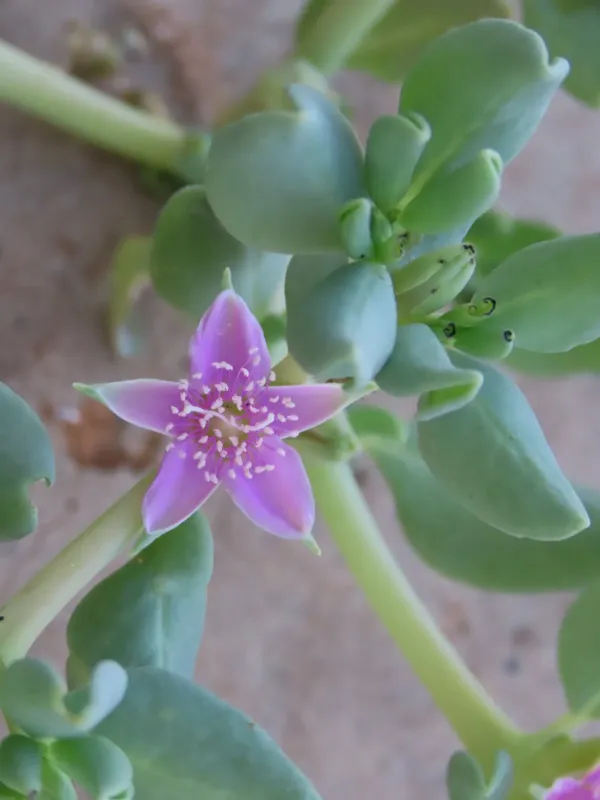
Description
Growing requirements
Sesuvium sesuvioides is a perennial herbaceous plant belonging to the Aizoaceae family. This species is a highly specialized halophytic succulent, evolved to thrive in environments with extremely high soil salinity and prolonged drought conditions.
Native to the arid regions of Africa and Western Asia, the plant is naturally adapted to salt marshes, coastal areas, and semi-desert landscapes. It has developed unique mechanisms to store water within its fleshy leaves, allowing it to survive harsh heat.
Botanically, it features a prostrate growth habit, forming dense mats that protect the soil surface from evaporation. The flowers are small and usually white or pink, which is a characteristic trait of many members of the Aizoaceae family.
The crop is strictly heliophilic, meaning it requires full, intense sunlight to develop properly. Any degree of shading will significantly inhibit its growth rate, decrease biomass production, and potentially weaken the plant's structural integrity.
In terms of soil requirements, Sesuvium sesuvioides prefers well-drained, saline soils. While it is tolerant to salt, it is notably sensitive to waterlogging. Therefore, farmers must ensure good soil aeration to prevent root rot, which is the most common cause of crop failure.
Yield
The primary agricultural interest in Sesuvium sesuvioides lies in its potential as a fodder crop in regions where water scarcity prevents the growth of traditional cereals. It can be irrigated with brackish or even saline wastewater, saving fresh water resources.
Yield capacity is highly influenced by ambient temperature and the concentration of minerals in the soil. Under optimal conditions, the plant produces significant biomass that can be harvested as a forage supplement for livestock after proper acclimation.
The plant is also recognized for its potential in phytoremediation. By absorbing excessive salts from the soil, it acts as a biological cleaning agent, gradually improving the soil quality for subsequent, less salt-tolerant crops in a rotation system.
As a vegetable crop, it is occasionally utilized in local diets. The leaves have a natural, pleasant salty taste, making them a unique nutritional addition in regions where salt intake needs to be managed or where traditional green vegetables are unavailable.
Managing harvest frequency is crucial to maintain high yields. Strategic pruning or harvesting of mature stems stimulates fresh growth, allowing for multiple cuts during the peak growing season if temperature and light conditions remain stable.
Main diseases and pests
The most significant threats to Sesuvium sesuvioides production are fungal pathogens associated with soil-borne moisture. Excessive irrigation or poor drainage inevitably leads to stem and root rot, which can spread rapidly through dense plantings.
Pests, particularly leaf-chewing insects, pose a moderate threat. Because the plant stores water, it becomes a target for insects during dry seasons when other surrounding vegetation has wilted, necessitating careful monitoring.
Integrated pest management (IPM) is strongly recommended for this crop. Because it is often used for fodder, chemical pesticide application should be strictly limited to prevent toxic residues from entering the food chain of livestock.
Regular inspection of the fields is necessary to identify early signs of localized infestations or rot. Removing and destroying affected plants immediately is a standard practice to keep the field healthy and maximize the total harvested biomass.
Competition from invasive weeds can also impact crop development, although the plant's ability to cover the ground densely helps to suppress most invasive species if the initial establishment of the crop is successful and uniform.