
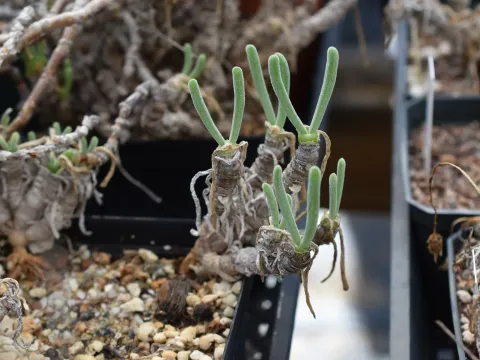
Monilaria
Monilaria
The sowing of Monilaria seeds should be scheduled for late winter or early spring to leverage the increasing day length for better seedling development.
What the section contains


Monilaria
Seeds are sown on the surface of a fine-textured, gritty substrate, as they require adequate light exposure for germination to occur.
Maintaining a high-humidity environment using a clear plastic cover or glass lid is essential until the seeds have fully germinated.
Frequent ventilation is necessary during the germination phase to ensure proper gas exchange and prevent fungal growth on the substrate surface.
Once the seedlings establish their first true leaves, the cover should be removed gradually to acclimatize the young plants to drier ambient conditions.
Monilaria belongs to the Aizoaceae family and is native to arid areas in South Africa, reflecting its evolved need for intense sunlight.
The soil must be highly porous and inorganic-based, typically consisting of pumice, coarse sand, or perlite to allow rapid water drainage.
Cultural requirements emphasize keeping the plant in a bright, sunny position to prevent etiolation and maintain its compact, segmented growth form.
Watering practices must follow a strict wet-dry cycle, providing water only during the growing season when the soil is completely desiccated.
During the winter months, the plant enters dormancy and must be kept in a cool, dry place to ensure it remains healthy and dormant.
Root rot is the primary threat to Monilaria, usually resulting from excessive irrigation or the use of heavy, water-retentive potting soils.
Mealybugs are common pests that tend to hide within the tight leaf junctions, requiring close inspection and targeted chemical control.
Spider mites can become a problem in very dry, stagnant air conditions, potentially causing scarring on the delicate skin of the plant segments.
Fungal infections, often manifested as localized spots or stem softening, are indicative of poor air circulation around the succulent body.
Regular monitoring and keeping the plant area clean are the most effective preventive measures against both insect pests and fungal pathogens.