
Monilaria obconica
Monilaria obconica
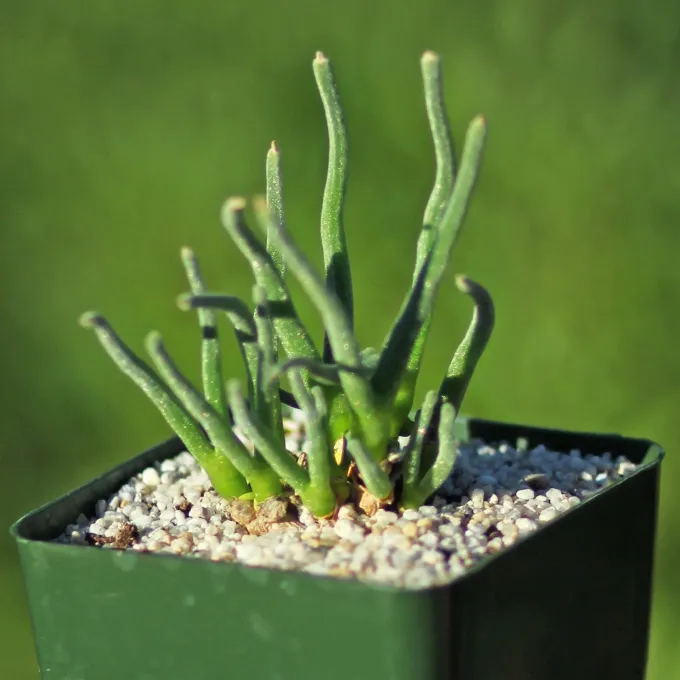
Description
Sowing dates
Monilaria obconica belongs to the Aizoaceae family and is a typical succulent species. In controlled growing conditions, seeds are sown in late winter or early spring to ensure the plant enters its active growth phase as daylight hours increase.
The sowing substrate must be highly porous and breathable; a mixture of sand, perlite, and potting soil in a 2:1:1 ratio is commonly used. Seeds are scattered on the surface, lightly covered with fine sand, and kept under glass at temperatures around 20–22 degrees Celsius.
Germination requires stable moisture during the first few weeks, so regular fine misting is recommended. It is vital to avoid waterlogging, which is fatal to young seedlings during their delicate emergence period.
Once the first pair of true leaves appears, seedlings require a gradual transition to drier air. Pricking out must be done with extreme care, as the root system of this plant is highly sensitive to mechanical damage.
Selecting the right container is a crucial step: wide, shallow pots with proper drainage holes are necessary to ensure the required gas exchange within the root zone.
Growing requirements
This plant has strict lighting requirements: for optimal development, it needs bright, direct sunlight for at least 6–8 hours a day. In low-light conditions, the stems become overly elongated, causing the plant to lose its characteristic compact shape.
The climate preferences of the crop match those of arid regions; therefore, it does not tolerate high humidity, which triggers rot. The ideal temperature range for vegetative growth is between 18 and 25 degrees Celsius.
The soil mixture must have a slightly acidic or neutral pH and possess excellent drainage properties. Using heavy clay soils without aerating components leads to the inevitable death of the root system due to asphyxia.
Watering must be strictly regulated: moderate during the active growth phase, allowing the substrate to dry out completely, and almost nonexistent during the dormant period. It is important to avoid getting water on the vegetative parts of the plant.
Fertilizers should be applied only during the active growth phase, no more than once a month, using specialized cactus and succulent formulas with low nitrogen content.
Main diseases and pests
The primary threat to the crop is root and stem rot, which results from substrate saturation or standing water in the tray. The first sign of infection is a change in epidermis color and loss of turgor pressure.
Among pests, the mealybug poses the greatest risk, often hiding in the folds of the plant's leaves. When detected, systemic insecticides must be used, as contact sprays often fail to reach the pest due to the plant's structural complexity.
Spider mites can infest the plant in conditions of extremely dry air and high temperature, leaving characteristic spots on the leaf surface. Regular plant inspections are essential for early problem detection.
To prevent fungal diseases, it is recommended to periodically treat the substrate with fungicides and ensure intensive room ventilation. Excessive humidity during nighttime creates ideal conditions for pathogen development.
- Regular ventilation of the growing area.
- Maintaining soil surface hygiene.
- Using sterile tools for maintenance and trimming.