
Monilaria moniliformis
Monilaria moniliformis
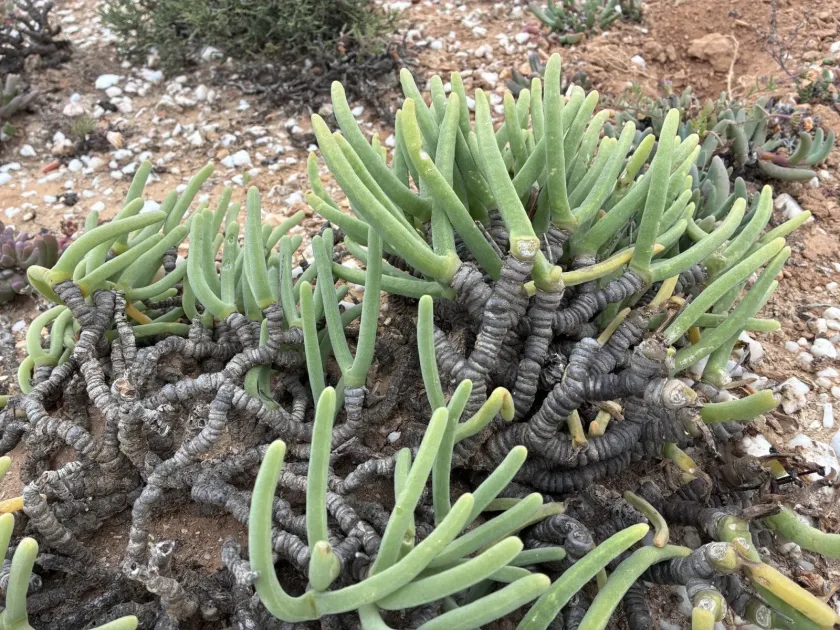
Description
Sowing dates
Sowing Monilaria moniliformis seeds is most successful when performed in late winter to early spring. During this period, the increasing daylight hours provide the natural stimulus needed for germination.
The ideal substrate for sowing is a very porous, sandy mix that allows for quick drainage. Seeds should be sown on the surface and pressed lightly without being buried deep in the soil.
Maintaining a consistent humidity level is essential during the first weeks. Covering the seed tray with glass or plastic helps keep the moisture stable until the seedlings emerge.
Once germination begins, usually after three weeks, the cover should be removed gradually to allow the young plants to adjust to the ambient humidity and ensure airflow.
Growth is naturally slow, and seedlings require patience. It is crucial not to overwater young plants, as their fragile roots are highly susceptible to dampening off.
Growing requirements
Monilaria moniliformis is a member of the Aizoaceae family, native to the arid landscapes of South Africa. It has evolved specific physiological mechanisms to survive in harsh, water-scarce environments.
This succulent thrives in bright light but requires protection from direct midday sun to prevent scorching of its delicate, beaded segments. A well-lit spot, such as a south-facing window, is ideal.
The potting medium must be inorganic and gritty. A mixture composed largely of pumice, perlite, and coarse sand mimics the natural rocky substrates where the plant originates.
Watering requirements are seasonal and strict. The plant should only be watered when the soil has completely dried out, and it enters a natural dormant phase during the hottest months.
Proper aeration is a key requirement for long-term health. Good airflow around the plant helps keep the stems firm and prevents the physiological stress that leads to stunted growth.
Main diseases and pests
The most significant threat to Monilaria moniliformis is root rot caused by stagnant water in the root zone. Once the roots begin to decay, the entire plant structure often collapses rapidly.
Mealybugs are the primary pest concern for this species. These small insects feed on the plant's sap and often cluster in the hidden crevices between the segments, making them difficult to detect.
Control of pests involves using horticultural soaps or systemic insecticides designed for succulent plants. Application should be done with care to avoid harming the plant's surface texture.
Fungal infections can also emerge in high-humidity conditions without sufficient light. If a plant shows signs of fungal spots, it should be isolated immediately to prevent spread to other specimens.
Prevention remains the best strategy: avoid overcrowding, maintain a strict dry-down cycle for the soil, and ensure the plant is placed in an area with constant, gentle air movement.