
Oscularia
Oscularia
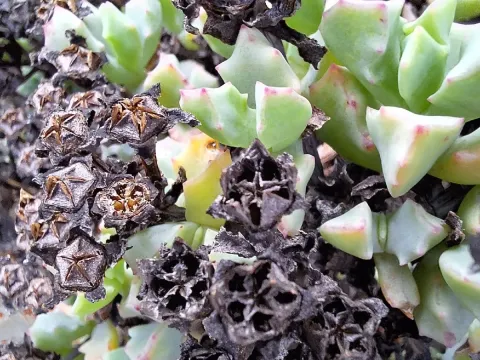
Oscularia is a genus of succulent plants within the Aizoaceae family, native to the Western Cape of South Africa. These plants are well-adapted to rocky, arid environments, utilizing their thick, glaucous leaves to store water during periods of prolonged drought.
What the section contains


Oscularia
In terms of light, Oscularia requires full exposure to direct sunlight for optimal growth. Insufficient light leads to etiolation, where the plant develops weak, elongated stems, losing its characteristic compact form and architectural appeal.
The substrate must be highly porous and inorganic-heavy to ensure rapid drainage. A standard succulent mix incorporating sharp sand, perlite, and fine gravel is recommended. This composition prevents the accumulation of excess moisture around the root system.
The plant thrives in temperatures ranging from 20 to 28 degrees Celsius during the active growing season. A distinct cooling period is necessary during the winter months, with temperatures dropping to 10–15 degrees Celsius to trigger the flowering mechanism.
Irrigation practices must prioritize the "soak and dry" method. The growing medium should be allowed to dry out completely before the next watering session. Excessive humidity in the soil or in the surrounding environment will almost certainly result in tissue decay.
Fungal pathogens represent the primary threat to the health of Oscularia. Root rot and stem rot are the direct consequences of improper watering practices, specifically keeping the soil moist for extended durations without adequate ventilation.
Pest infestations often include mealybugs, which are notoriously difficult to control in succulent collections. These insects cluster in the crevices between leaves, feeding on plant sap and stunting overall growth through their localized damage.
Spider mites are another common pest, particularly in environments with poor air circulation and high heat. They manifest as tiny webs and mottled foliage, causing the plant to lose its vibrant colouration and health over time.
Treatment involves the use of specialized systemic insecticides designed for succulents. It is crucial to test the chemical on a small portion of the plant first to ensure the leaves do not exhibit phytotoxic reactions or scarring.
Preventive maintenance is the most effective strategy. This includes providing adequate airflow, maintaining low humidity, and monitoring the plant closely for signs of distress or early pest colonization to prevent widespread infection.