
New Zealand spinach
Tetragonia crystallina
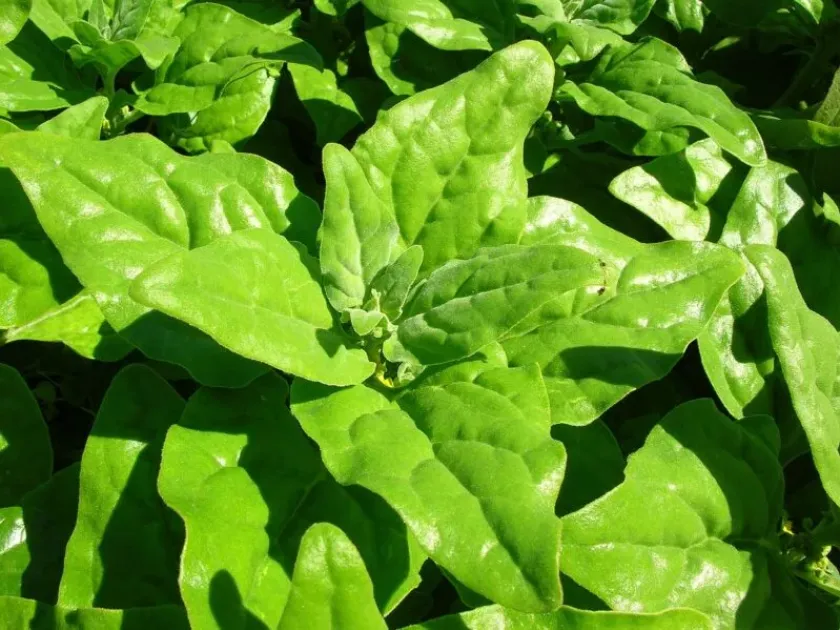
Description
Sowing dates
New Zealand spinach is a tender annual plant belonging to the Aizoaceae family. It is typically sown in open ground only after the risk of late spring frost has passed and the soil has warmed to at least 15-18 degrees Celsius.
For regions with shorter growing seasons, starting seeds indoors in individual pots about four to five weeks before the final frost date is highly recommended, as this plant is sensitive to significant root disturbance.
Seeds should be sown at a depth of 1-2 centimeters. Proper spacing is essential, as the plant grows as a sprawling succulent-like vine, requiring about 30-40 centimeters of space between individual plants.
Because the seeds are encased in a tough, woody seed coat, soaking them in warm water for 24 hours prior to planting is a common practice to encourage more uniform and rapid germination.
In warmer climates, successive sowings can be made throughout the summer season to maintain a steady harvest of fresh, succulent leaves for culinary use.
Growing requirements
Tetragonia crystallina is a warmth-loving crop that thrives in temperatures between 20 and 25 degrees Celsius. While it can handle some heat better than true spinach, consistent moisture remains vital.
The plant requires a location with full sun exposure to maintain its growth rate. While it is known for being drought-tolerant, shading will significantly reduce yields and make the stems brittle.
The soil should be well-drained, fertile, and light in texture. It adapts well to sandy or loamy soils but requires a neutral or slightly alkaline pH to reach its full potential.
Regular irrigation is necessary to ensure the leaves remain tender and palatable. If the plant dries out too severely, the leaves tend to become bitter and develop a tougher, fibrous texture.
Incorporating compost or well-rotted manure during site preparation will provide the necessary nitrogen to support the rapid development of its leafy branches throughout the season.
Yield
Yields are primarily influenced by consistent harvesting and proper pruning. Pinching off the tips of the main stems encourages branching, which in turn leads to a higher density of harvestable leaves.
The first harvest can usually begin around 40 to 50 days after emergence. By selectively picking the outer, more mature leaves, the plant is encouraged to continue producing new foliage from its center.
Under optimal growing conditions, a few well-tended plants can provide a substantial supply of greens for the entire household throughout the summer and early autumn.
It is important to avoid letting the plant set seed too early. If flower buds appear, they should be removed immediately to redirect the plant's energy toward leaf production rather than reproduction.
Plant density should be managed carefully; overcrowding will decrease the airflow around the plants and result in a lower total yield per square meter due to competition for nutrients and light.
Main diseases and pests
New Zealand spinach is generally considered quite robust and less prone to common spinach pests, though poor air circulation or excessive moisture can lead to powdery mildew issues.
Slugs and snails can be a significant problem, particularly during the early stages of plant growth or during wet spells, as they are attracted to the succulent nature of the leaves.
Aphids may occasionally appear, usually congregating on the undersides of the leaves. Monitoring the plants regularly is the best way to detect early infestations before they spread.
Maintaining a weed-free area around the base of the plant helps reduce humidity and provides better airflow, which acts as a natural deterrent against fungal pathogens.
Good cultural practices, including consistent irrigation and appropriate fertilization, strengthen the plant's natural defense systems against minor pest and disease outbreaks.
Harvesting
Harvesting is performed by picking individual leaves or cutting off the growing tips, leaving the main structure of the plant intact so that it can continue to produce for several months.
For the best flavor and texture, harvest the leaves in the early morning hours when the moisture content in the plant tissues is at its highest.
The harvested leaves should be washed and cooled promptly to prevent wilting. While this plant is hardier than traditional spinach, it still loses its fresh quality if left in the heat.
Since New Zealand spinach contains small amounts of oxalates, it is often recommended to blanch the leaves before eating them in large quantities, especially for those sensitive to oxalates.
At the end of the season, all plant debris should be removed and composted or disposed of properly to ensure that the site is clean for the next planting season.