
Monilaria chrysoleuca
Monilaria chrysoleuca
Description
Growing requirements
Monilaria chrysoleuca is a fascinating succulent species belonging to the Aizoaceae family. Native to the arid regions of South Africa, it has evolved to thrive in environments characterized by limited water availability and intense, prolonged exposure to the sun.
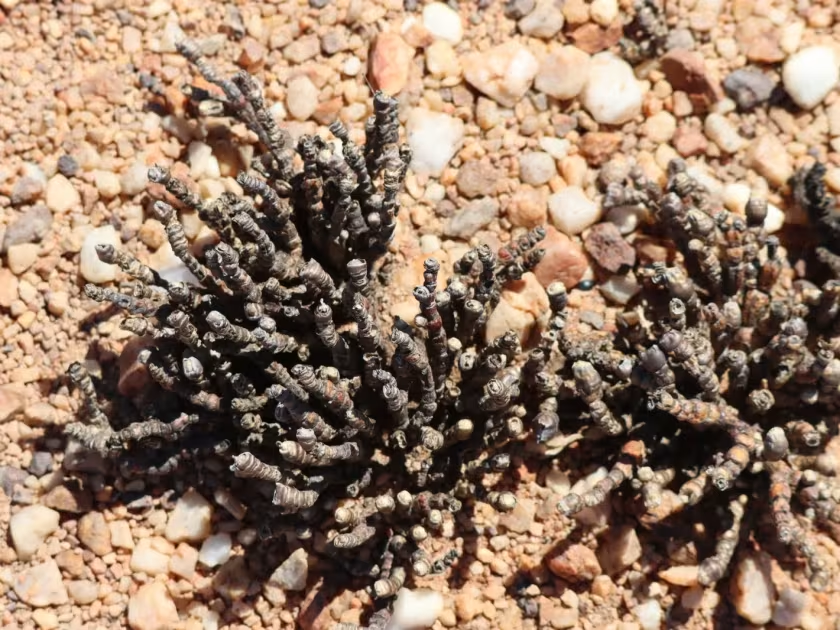
Botanically, this plant is defined by its distinctive segment structure. During its active growth stage, it produces long, cylindrical leaves that resemble rabbit ears. These leaves are covered with small, crystal-like papillae that give the plant a glistening, golden appearance under bright light.
Cultivation requirements focus primarily on extreme light exposure. To maintain its compact and healthy habit, the plant needs several hours of direct sunlight daily. In insufficient light conditions, the plant will etiolate, becoming leggy and significantly more susceptible to various physiological stressors.
Soil requirements demand a highly mineral-based, porous substrate. A typical mix includes coarse sand, pumice, and minimal organic matter. This structure prevents water retention around the roots, which is crucial for preventing the rapid development of rot that often kills these succulents.
The agrotechnical management requires precise irrigation cycles. The plant enters a dormant phase where the leaves may wither; during this period, watering must be halted almost entirely to prevent root damage. Water is only reintroduced once the plant shows signs of new vegetative activity.
Main diseases and pests
The primary threats to this species are fungal pathogens, specifically those causing root and collar rot. These issues are almost always the result of improper watering regimes where the soil remains damp for too long, especially during lower-light winter months.
Pest management involves regular monitoring for mealybugs, which tend to congregate in the protected areas between the succulent segments. Furthermore, spider mites can pose a risk in environments with very low humidity, requiring prompt intervention with appropriate horticultural oils or acaricides.