
Mesembryanthemum tenuiflorum
Mesembryanthemum tenuiflorum
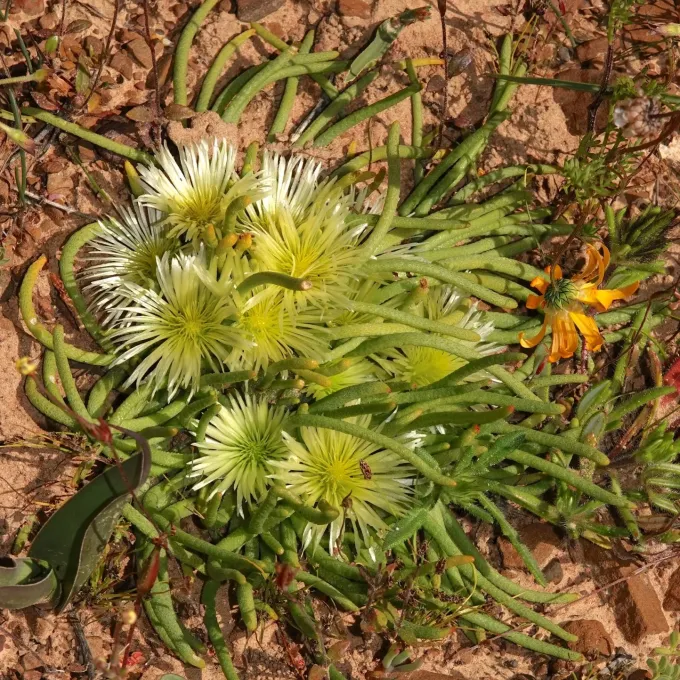
Description
Sowing dates
Mesembryanthemum tenuiflorum is a species belonging to the Aizoaceae family, known for its distinct succulent foliage and adaptation to arid environments.
Seeds are typically sown in early spring, specifically late March to April, once the danger of ground frost has fully passed to ensure successful germination.
The substrate for sowing should be well-draining, consisting of a mix of sand, peat, and horticultural grit to mimic the natural soil conditions of its origin.
When sowing, it is crucial to keep the seeds on the surface or cover them only with a very light dusting of soil, as they require light for optimal germination.
Seedlings need to be kept at a stable temperature of at least 20°C (68°F) to ensure strong development before being hardened off and transplanted into the garden.
Growing requirements
This species requires full sun exposure for at least six to eight hours a day to maintain its compact growth form and promote healthy flowering.
Soil requirements are strict: the medium must be highly porous and low in organic matter. Sandy or rocky soils are ideal, as they allow water to drain rapidly.
Climate adaptation is specific to warm and dry regions. While the plant can tolerate intense heat, it is sensitive to humidity and cold temperatures, which can cause internal rotting.
Watering should be very cautious. Allow the soil to dry out completely between waterings, and always avoid wetting the succulent leaves directly.
Fertilization should be kept to an absolute minimum. A balanced, low-nitrogen liquid fertilizer can be applied diluted during the active summer growing season.
Main diseases and pests
Root rot is the primary physiological threat to Mesembryanthemum tenuiflorum, usually caused by overwatering or poorly drained heavy clay soils.
Pests such as mealybugs and spider mites frequently target these plants, especially in greenhouses or sheltered environments where airflow may be stagnant.
To prevent these infestations, it is recommended to maintain high air circulation around the plants and avoid overcrowding when planting them in beds.
Any signs of fungal growth on the stems or leaves require immediate removal of affected tissue and the application of appropriate systemic fungicides.
- Regular inspection for spider mites
- Strict drainage management
- Use of well-ventilated growing sites