
Mesembryanthemum spectabile
Mesembryanthemum spectabile
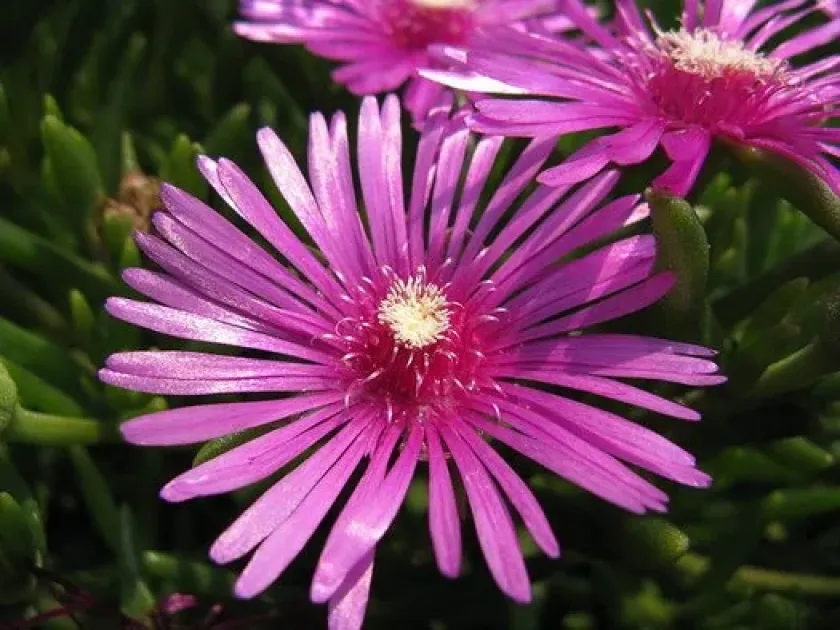
Description
Sowing dates
Sowing seeds of Mesembryanthemum spectabile is best performed in early spring under controlled indoor conditions. Use a well-draining, sandy soil mix to prevent fungal issues during the early stages of development.
Since the seeds are extremely small, they should be surface-sown and pressed gently into the substrate without covering them with soil. Maintain a consistent temperature of around 20 degrees Celsius to ensure optimal germination rates.
Seedlings require significant light immediately after emergence to prevent leggy growth. Once the first true leaves have developed, thin out the seedlings or transplant them into individual containers to allow for robust root development.
Acclimatization to outdoor conditions is necessary before final planting. Gradually increase exposure to direct sunlight and lower temperatures over a period of one to two weeks to harden off the young plants.
Transplant into the permanent garden site only after the risk of frost has completely passed. Choose a location with full exposure to the sun, ensuring the soil is warm and dry to encourage rapid establishment.
Growing requirements
Mesembryanthemum spectabile, a member of the Aizoaceae family, is a trailing succulent native to the arid regions of South Africa. Its unique biological structure allows it to thrive in nutrient-poor, rocky environments.
The primary requirement for this species is intense sunlight, as the flowers are heliotropic and only open fully under bright, direct sun. Planting in shaded areas will result in poor flowering and weakened, stretched stems.
Soil composition must prioritize drainage above all else. This plant performs best in sandy or gravelly soils where water drains instantly, preventing the succulent tissues from becoming waterlogged and prone to decay.
Watering should be minimal, as the plant is highly adapted to drought. Irrigate only when the substrate is completely dry, and always avoid wetting the foliage, which can trap moisture and trigger bacterial infections.
In temperate zones, this plant is treated as an annual or a container plant to be moved indoors during winter. It requires a cool, bright location during the dormant season to survive until the following spring.
Main diseases and pests
The most significant threat to this crop is root rot caused by stagnant moisture. This condition develops rapidly in compacted or poorly draining soils, leading to the collapse of the plant's vascular system.
Spider mites represent the most common pest, especially in dry and hot conditions. They thrive by extracting sap from the succulent leaves, resulting in stippled foliage and stunted growth across the plant bed.
Mealybugs can also infest the plant, clustering in leaf axils and crevices. Their presence often goes unnoticed until the plant shows visible signs of decline, necessitating a thorough inspection of the foliage.
Pest management relies on both chemical and cultural controls. In cases of localized infestation, wiping the affected areas with insecticidal soap can be effective, provided it is done during cooler parts of the day.
Maintaining proper spacing between plants is crucial to ensure good airflow. This simple practice reduces the micro-humidity levels around the stems, which is the most effective way to prevent fungal pathogens from taking hold.