
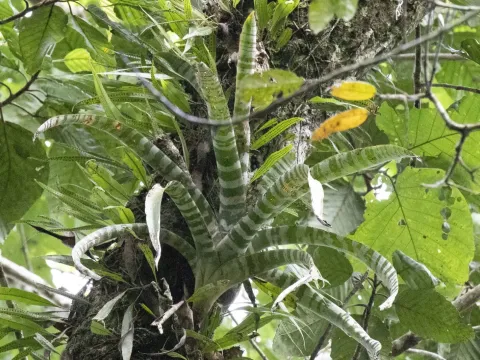
Aechmea fasciata
Aechmea zebrina
Aechmea fasciata, commonly known as the silver vase plant, is a prominent member of the Bromeliaceae family. Originating from the tropical rainforests of Brazil, this species has adapted to grow as an epiphyte, utilizing its root system primarily for anchorage on tree trunks.
What the section contains
Aechmea fasciata
Botanically, it features a sturdy rosette of leathery leaves marked with horizontal silver banding. The inflorescence is a spectacular, long-lasting pink spike with small blue petals, which eventually fade into dark berries, marking the plant's reproductive phase.
Cultivation requires bright, indirect light to maintain the vibrant leaf coloration and the health of the inflorescence. Extreme direct sunlight can cause leaf scorching, while insufficient light hinders the plant’s ability to produce its unique decorative bloom.
The substrate must prioritize drainage and aeration, mimicking the natural environment of epiphytes. A mixture consisting of orchid bark, peat moss, and coarse perlite is ideal, ensuring that the roots remain aerated while retaining necessary moisture levels.
Proper agrotechnical practice dictates that water should be directed into the central cup (tank) of the rosette rather than solely onto the soil. This mimicry of tropical rainfall is essential for the nutrient uptake and overall metabolic function of the Aechmea genus.
Pest management is a critical aspect of Aechmea cultivation, with mealybugs and scale insects being the most prevalent threats. These pests often hide deep within the crevices of the rosette, making them difficult to detect until an infestation is well-established.
Root rot, triggered by waterlogged soil, represents a primary pathological threat to the plant's health. Maintaining proper drainage and avoiding stagnant water in the soil medium is vital to prevent the rapid decay of the basal tissues.
Spider mites are frequently encountered in low-humidity environments, leading to leaf discoloration and stunted growth. Increasing ambient humidity or regular misting with distilled water acts as a deterrent and helps maintain the plant's physiological vigor.
Fungal infections, often characterized by brown spotting or mushy leaf bases, usually stem from improper air circulation. Proper spacing between specimens and avoiding overhead watering during cooler hours can significantly reduce the risk of pathogen outbreaks.
Biological control and the application of mild systemic insecticides remain the standard methods for pest suppression. Careful monitoring of the plant’s base and underside of leaves remains the most effective strategy for preserving the long-term vitality of the culture.