

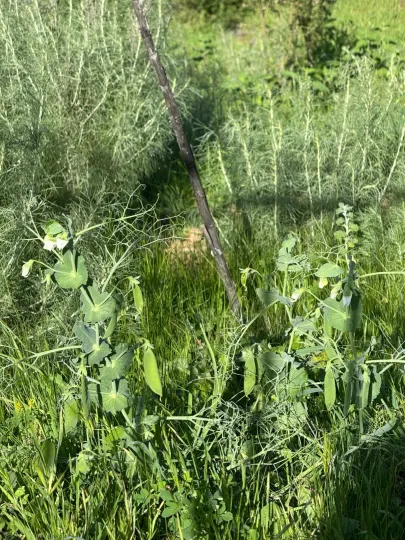
Description
Sowing dates
Field pea (Pisum sativum L.) is a cool-season crop typically sown as early as possible in the spring. Sowing begins as soon as the soil is workable, usually when soil temperatures reach 2–4°C, to ensure deep root development before summer heat.
Early sowing allows the crop to utilize soil moisture effectively and avoid the negative impact of heat stress during the critical flowering and pod-filling stages. The seeds are tolerant to light frosts, which is a key advantage for early spring planting.
Seeding depth is generally kept between 4 and 8 cm depending on soil texture. Proper depth ensures consistent moisture levels for germination while protecting seeds from potential damage by birds or surface drying.
The seeding rate is determined by the thousand-kernel weight and the desired plant population, typically ranging from 80 to 120 plants per square meter. Precise spacing helps in creating a uniform canopy.
Post-seeding rolling is highly recommended to eliminate large soil air pockets, improve seed-to-soil contact, and promote uniform emergence across the field, which is essential for consistent maturation.
Growing requirements
Field pea belongs to the Fabaceae family and requires fertile, well-drained soils with a neutral pH between 6.5 and 7.5. It performs poorly in waterlogged conditions and highly acidic soils.
The crop is highly responsive to inoculation with Rhizobium leguminosarum bacteria. This symbiotic relationship allows peas to fix atmospheric nitrogen, reducing the need for supplemental nitrogen fertilizer.
Peas have a high water requirement, particularly during the flowering and pod formation period. Drought stress during these phases can lead to flower abortion and significantly lower yields.
In terms of temperature, field peas thrive in cool, moist climates. Exposure to high temperatures during the reproductive phase often results in poor pollination and reduced seed size, negatively affecting overall crop quality.
Rotation is a critical aspect of pea cultivation. Planting peas after cereals helps break disease cycles and improves soil nitrogen levels, providing a significant benefit to the subsequent crop in the rotation.
Yield
Yields of field pea typically range from 3 to 4.5 tons per hectare. High-yielding semi-leafless varieties combined with proper management practices can push these levels even higher in favorable environments.
Success in production depends largely on the management of plant density and the prevention of lodging. Modern varieties with tendrils provide better support, allowing plants to stand upright and improving harvest efficiency.
Micronutrient availability, such as manganese, boron, and molybdenum, is vital for high yields. Deficiencies can lead to stunted growth and impaired nitrogen fixation, eventually reducing the overall harvest.
Timely weed control during the early stages of growth is essential to prevent competition for light and water, which are the main limiting factors in high-density pea stands.
Effective water management or irrigation during the critical pod-filling phase can lead to substantial increases in seed size and total yield output compared to rain-fed crops.
Main diseases and pests
Field peas face various pathological threats, including Alternaria blight, Anthracnose, Rhizoctonia root rot, Sclerotinia white mold, Gray mold, Fusarium root rot, and Downy mildew. Fungicide seed treatments are standard practice.
Major pests that can devastate yields include Cabbage white butterfly, Buckaroo weevil, Leafrollers, Gall midges, Pea weevil, Goldtail moth, Plum fruit moth, Grape phylloxera, and Root-knot nematodes.
Integrated Pest Management (IPM) is crucial. This includes using certified disease-free seeds, maintaining crop rotation intervals of 3–4 years, and monitoring fields for early signs of pest infestation.
Chemical control using selective insecticides should be timed based on economic thresholds and the presence of pollinators, especially during the flowering stage, to minimize environmental impact.
Preventative measures, such as deep tillage to bury crop residues and controlling volunteer plants, are effective ways to reduce the overwintering populations of both pests and pathogens.
Harvesting
Harvesting should occur when the moisture content of the seeds drops to 16–18% and the pods have turned a light brown color. Timely harvest is necessary to prevent pod shattering and field losses.
Direct combining is the most common method. The combine setup must be carefully calibrated: reducing the drum speed and increasing the concave gap are vital to prevent mechanical damage to the seeds.
In cases of uneven ripening or high weed pressure, swathing may be employed before combining to allow for uniform drying of the crop in the field.
Post-harvest handling requires immediate cleaning and drying of the seed. Storing grain with excessive moisture leads to spoilage and a drastic reduction in germination rates for the following season.
Storage facilities must be well-ventilated and kept free of rodents and stored-product insects to ensure the long-term quality and marketability of the harvested pea crop.
In brief
28
Crop diseases
59
Crop pests
Content graph
Crop diseases · 28
Alternaria leaf spotAnthracnoseAphanomyces root rotAscochyta blightAscochyta blight of chickpeaBacterial wiltCercospora leaf spotCladosporiosisFusarium root rotFusarium wiltGray moldPea Ascochyta blightPea early browningPea enation mosaicPea leaf rollPea mosaicPea seedborne mosaicPea streakPeronosporosisPhoma leaf spotPlant RustPowdery mildewPythium root rotRed clover vein mosaic virusRhizoctonia root rotRoot-knot nematodeSclerotinia rotSeptoria
Content graph
Crop pests · 59
Alfalfa seed chalcidAlfalfa weevilAphidApple blossom weevilApple fruit weevilApple fruit weevilAustrian beetleBean aphidBeet flea beetleBeet midgeBeet webwormBeet weevilBrown-tail mothCabbage aphidCabbage mothCereal leaf beetleChloropid fliesCodling mothComstock mealybugCotton bollwormCrucifer flea beetleDiamondback mothDiamondback mothEuropean apple sawflyEuropean corn borerEuropean grapevine mothGall midgesGoat moths and Carpenter mothsGrape phylloxeraGreenbugGrey beet weevilGrey beet weevilGround beetle (Zabrus tenebrioides)Hemp flea beetleHop aphidLarge whiteLeafhoppersLeaf miner mothLeaf minersMelon flyOnion flyOriental fruit mothPea aphidPea mothPear fruit mothPea weevilPollen beetlePollen beetlePotato tuber mothPyralid mothsSand weevilSawfliesSoft scalesSunn pestTurnip mothTurnip sawflyTwo-spotted spider miteWeevilWheat thrips
Content graph
Connections · Field pea
Most often together:
Marketplace