
Description
Symptoms
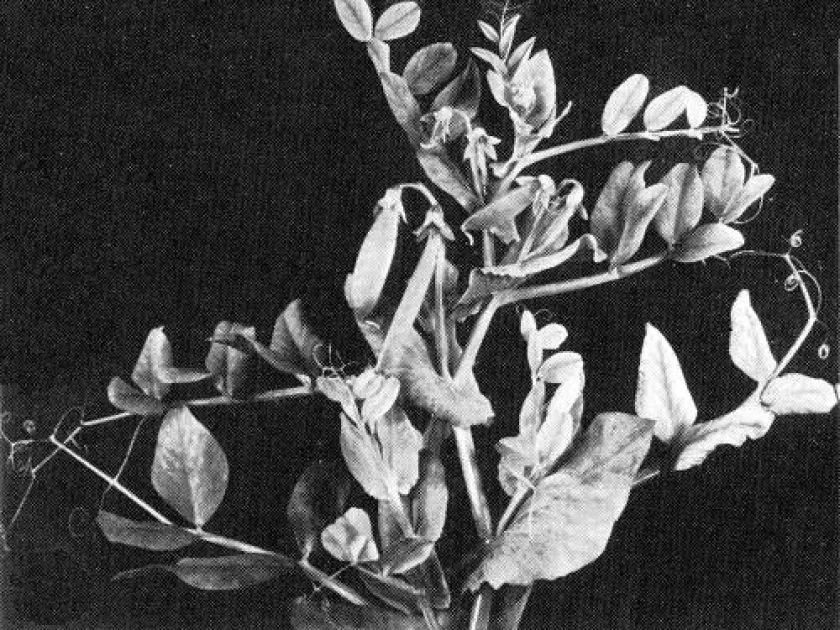
Early symptoms include a subtle yellowing or chlorosis of the apical leaves, which gradually start to roll or curl inwards as the infection progresses.
Infected plants exhibit severe stunting and shortened internodes, giving them a compact, bushy appearance that distinguishes them from healthy, vigorous plants.
The foliage becomes brittle and thickened, often showing a glossy appearance, while the color may shift toward a pale, jaundiced yellow shade.
If the infection occurs early in the growing season, flowering may be aborted, or if pods do form, they are usually sparse, small, and contain poor-quality seeds.
Symptom distribution within a field is typically patchy, appearing in clusters that correspond to the movement and feeding patterns of aphid colonies.
Pathogen
Pea leaf roll is a viral disease caused by the pea leaf roll virus (PLRV), which belongs to the Luteoviridae family. This is a systemic infection that disrupts the plant's vascular system, preventing proper nutrient translocation.
The virus persists in perennial legumes such as clover, alfalfa, and vetch, which serve as primary reservoirs during the winter months and early spring.
Aphids, specifically the pea aphid (Acyrthosiphon pisum), act as the primary vectors. The virus is transmitted in a persistent manner, meaning the aphid remains infectious for the rest of its life after feeding on a diseased plant.
It is important to note that the virus is not transmitted via seeds or mechanical contact, making the control of the vector population the central pillar of disease management.
The disease primarily affects field peas, although it can manifest in other legumes, necessitating vigilant monitoring in areas with diverse cropping systems.
Conditions for development
Disease development is heavily dependent on weather patterns that favor aphid population growth, specifically mild, dry springs and early summers.
The peak period of infection often follows the migration of winged aphids from perennial legume pastures to emerging pea seedlings.
Fields located adjacent to established legume stands are at a much higher risk of early and severe outbreaks due to the proximity of the virus source.
Plants under physiological stress, such as drought or nutrient deficiency, are more susceptible to rapid viral multiplication and symptom expression.
The lack of early-season insecticide application during the initial aphid colonization phase allows the virus to spread rapidly throughout the entire pea field.
Why it matters
The virus causes significant harm by effectively starving the plant's developing tissues of necessary photoassimilates, leading to yield loss.
Yield reductions can exceed 50% in cases of early-season infection, severely impacting the farm's economic productivity and profitability.
Seed quality is drastically reduced, affecting both the weight of seeds and their viability, which renders them unsuitable for future sowing operations.
In the processing industry, peas affected by the leaf roll virus have altered texture and sugar profiles, making them unacceptable for commercial canning.
Repeated outbreaks force farmers to incur additional costs for pesticides and changes in crop rotation, increasing the financial burden on the agricultural enterprise.
Protection
The primary control strategy focuses on managing aphid populations using systemic insecticides applied at the first sign of colonization on seedlings.
Maintaining a spatial buffer between new pea plantings and established perennial legume fields can significantly reduce the risk of primary viral transmission.
Implementing a proper crop rotation cycle, with at least 4–5 years between legumes, is essential to break the pathogen's lifecycle and reduce local reservoir populations.
Good agricultural practices, such as balanced fertilization and effective weed control, support healthy plant growth and increase resilience against viral pressure.
- Utilizing resistant pea varieties if commercially available.
- Monitoring fields using yellow sticky traps to track aphid migration.
- Destroying weeds that may host aphid populations near the field margins.
- Applying integrated pest management (IPM) to optimize chemical inputs.
Pathogens and affected parts
Affects crops · 1
Discussion
No discussions yet — be the first.