
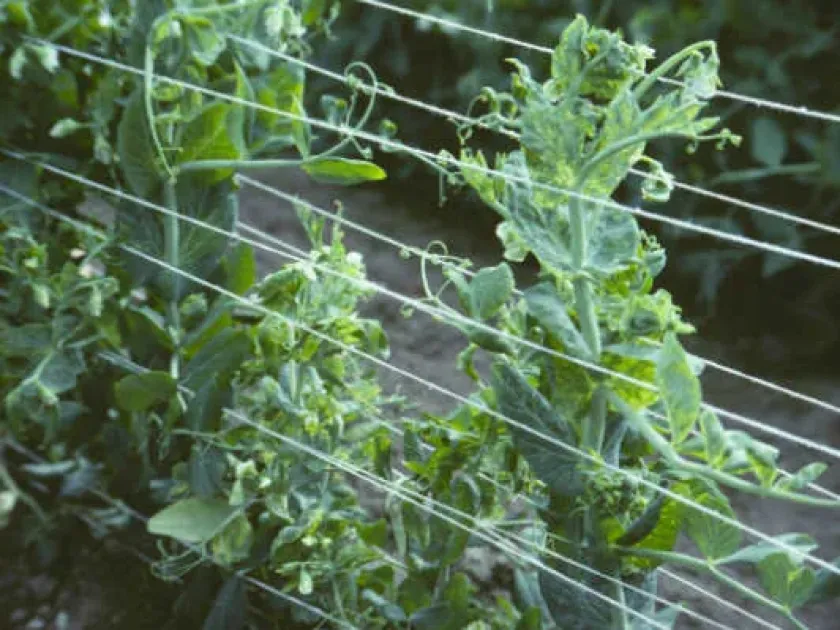
Description
Symptoms
Initial symptoms include chlorotic spots on the youngest leaves, which eventually develop into a typical mosaic pattern of light and dark green areas.
Infected plants typically show stunted growth, characterized by shortened internodes and a bushy, rosette-like appearance compared to healthy crops.
Leaves may become deformed, showing curling, crinkling, or even narrowing into thread-like shapes as the virus disrupts normal development.
Systemic symptoms also include longitudinal streaking on stems and petioles, which can lead to necrosis in severe stages of the infection.
Floral development is often severely hampered, leading to reduced pod set and the production of small, shriveled, or non-viable seeds.
Pathogen
Pea mosaic virus (PMV) is a plant pathogenic virus belonging to the Potyviridae family, which causes systemic infection in pea crops and other legumes.
The virus survives the winter in perennial leguminous plants, such as clover and alfalfa, which act as primary reservoirs for the infection.
Transmission occurs primarily through aphid vectors, most notably the pea aphid, in a non-persistent manner during their feeding process on plants.
Because the transmission is non-persistent, aphids can transmit the virus to healthy plants within seconds of probing an infected source.
Secondary spread can also occur through mechanical transmission, such as farm equipment or direct foliage contact during agricultural operations.
Conditions for development
The spread of the virus is highly dependent on aphid population dynamics, which are favored by warm and moderately humid spring weather conditions.
The proximity of pea fields to pastures or meadows containing perennial legumes significantly increases the risk of early-season infection.
Dense crop stands create a favorable microclimate for aphid reproduction, facilitating the rapid movement of vectors between plants.
Variable weather that encourages aphid migration—such as wind patterns and temperature fluctuations—can spread the virus across large areas quickly.
Agricultural practices that favor the survival of weed hosts around field margins directly contribute to the persistent presence of the virus.
Why it matters
Pea mosaic causes significant economic losses by reducing both the yield quantity and the quality of the harvested pea crop.
Photosynthetic efficiency is greatly diminished due to chloroplast damage, resulting in reduced accumulation of proteins and carbohydrates in the plant.
Infected pea crops exhibit reduced vigor, making them more susceptible to secondary infections and environmental stresses like drought.
Seed quality is severely affected, with seeds showing poor germination rates and reduced nutritional value, rendering them unsuitable for future sowing.
Overall, losses can range from minor to severe, often exceeding 40% of the potential yield in cases of early infection before the flowering stage.
Protection
Effective management begins with spatial isolation of pea fields from established perennial legume pastures to reduce the initial virus inoculum.
Rigorous weed control, particularly of leguminous weeds in and around fields, is essential to eliminate the natural reservoirs of the virus.
The use of certified virus-free seeds and the planting of resistant or tolerant pea varieties are the most sustainable strategies for disease prevention.
Early-season insecticide applications targeted at aphid populations can effectively reduce the rate of virus transmission during the crop's vulnerable growth phase.
- Spatial isolation of fields.
- Weed management.
- Use of resistant cultivars.
- Aphid control via insecticides.
- Certified seed usage.
Pathogens and affected parts
Affects crops · 1
Discussion
No discussions yet — be the first.