
Description
Symptoms
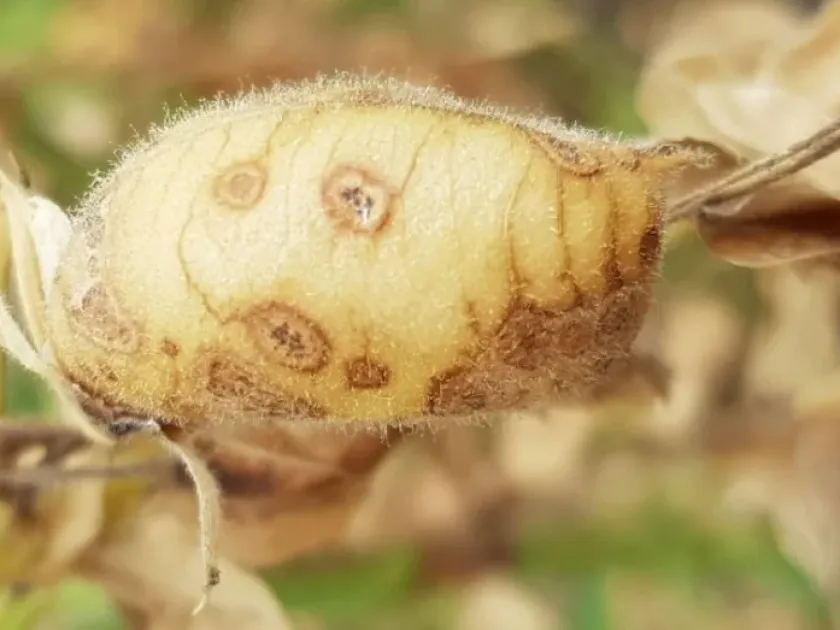
Symptoms appear as small, dark-brown, or greyish spots on leaves, stems, and pods, often surrounded by a distinct dark necrotic margin.
The most diagnostic feature is the presence of small black dots, known as pycnidia, arranged in concentric circles within the infected lesion area.
Stem infections lead to the formation of deep lesions or girdling, which often causes the branches to break and the entire plant to wilt and die.
Pod infection results in circular lesions that penetrate the pod wall, leading to the contamination of seeds and the formation of shriveled, discolored grains.
Under favorable high-humidity conditions, the infection spreads rapidly, causing defoliation and the development of large, blighted patches across the field.
Pathogen
Ascochyta blight is caused by the fungus Didymella rabiei (anamorph Ascochyta rabiei), which specifically attacks chickpeas, lentils, and field peas.
The pathogen persists on infected crop residues in the soil and can be seed-borne, allowing it to initiate infection early in the growing season.
During the spring, the fungus develops pycnidia and perithecia on old stalks, releasing spores that are spread by wind-blown rain and splashing water.
The pathogen is known for its high genetic variability, leading to the rapid emergence of new races that can overcome resistant traits in some chickpea varieties.
The infection cycle is closely linked to climatic cycles, as the pathogen survives dormant periods through specialized structures that are highly resistant to cold and drought.
Conditions for development
Cool, wet weather with frequent rainfall and high relative humidity are ideal conditions for the massive dispersal and germination of fungal spores.
Temperatures ranging between 15°C and 25°C are considered optimal for the rapid colonization of plant tissues and the development of pycnidia.
Dense crop stands create a stagnant microclimate that traps moisture within the canopy, significantly accelerating the progression of the disease.
Wind-driven rain acts as the primary mechanism for long-distance dissemination, moving spores from infested field margins to the center of healthy crops.
Low soil temperatures and high moisture levels during the seedling stage promote primary infections, leading to early stand depletion.
Why it matters
Ascochyta blight is considered the most destructive disease of chickpeas, potentially resulting in total yield loss if environmental conditions favor the pathogen.
The reduction in grain yield is caused by severe defoliation, stunted growth, and the poor quality of seeds, which may lose their viability completely.
Infected crops are often rejected for trade due to poor appearance and potential toxicity, leading to significant financial losses for the farming operations.
The disease forces farmers to increase chemical inputs, significantly raising the production costs and decreasing the overall economic viability of chickpea cultivation.
The persistence of the pathogen in the soil forces a shift in land management, often preventing farmers from planting high-value pulse crops in subsequent years.
Protection
The use of certified, disease-free seed is the most important preventive measure, supplemented by chemical seed treatments to minimize initial inoculum.
Implementing a strict crop rotation of at least three years between pulse crops is essential to reduce the levels of inoculum present in the field soil.
Selecting and planting genetically resistant or tolerant chickpea cultivars is the primary strategy for managing the blight in regions with a high risk of infection.
Deep plowing and proper field hygiene to bury plant residues help to accelerate decomposition, preventing the survival of the fungus between seasons.
Foliar application of systemic fungicides at the onset of symptoms, particularly before bloom and pod set, helps to suppress secondary infection and save the yield.
Pathogens and affected parts
Affects crops · 3
Discussion
No discussions yet — be the first.