
Description
Symptoms
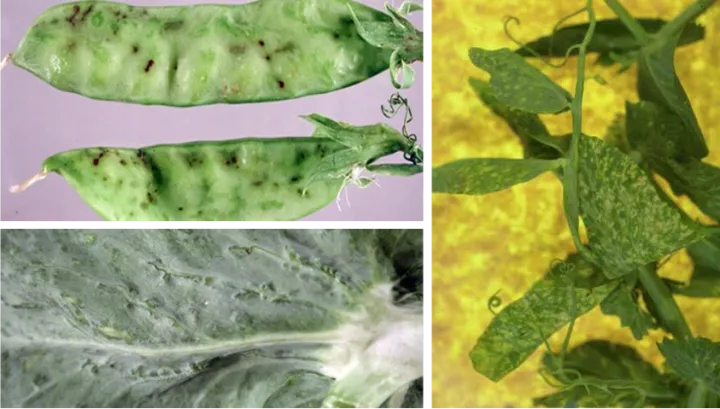
Symptoms of PSbMV include a distinct mosaic pattern on leaves, characterized by light and dark green mottling. Clearing of the veins is often observed as one of the first symptoms during the early stages of growth.
Infected plants frequently exhibit severe leaf deformation, curling, and a reduction in the size of the leaflets. These symptoms are often accompanied by a significant reduction in overall plant height and vigor.
A shortened internode length results in a stunted, bushy appearance of the plant. This structural change is highly characteristic of the disease and is usually visible shortly after infection.
The virus adversely affects flower development, leading to flower abortion and the production of malformed, shrunken pods. The total number of seeds per pod is typically reduced in infected plants.
Seeds harvested from infected plants may show symptoms such as necrotic lesions or surface cracks, which are indicative of systemic viral infection and reduced seed viability.
Pathogen
The causal agent of this disease is the Pea seedborne mosaic virus (PSbMV), a member of the Potyvirus genus. It is characterized by its flexuous, filamentous viral particles that infect the vascular system of the host plant.
As the name implies, the virus is primarily seed-transmitted. The infection of the embryo within the seed allows the virus to survive from one season to the next, serving as the primary source of inoculum when the crop is planted.
Besides seed transmission, the virus persists in infected host plants and certain weeds. It has a relatively broad host range within the Fabaceae family, facilitating its persistence in agricultural landscapes.
The virus affects several economically important crops, including field peas and lentils. Other legumes, such as faba beans and vetch, can also harbor the virus and act as reservoirs.
Transmission in the field occurs via aphid vectors in a non-persistent manner. The virus is acquired by aphids after feeding for short periods on infected plants and is rapidly transmitted to healthy crops.
Conditions for development
Environmental conditions that favor aphid population growth are highly conducive to the spread of PSbMV. Warm temperatures, coupled with adequate humidity, facilitate the migration and activity of aphid vectors.
The proximity of the crop to previous seasons' legume debris or infested neighboring fields increases the risk of early-season infection. High plant density also promotes the rapid spread of the virus through mechanical contact.
The presence of wild legume species in the surrounding areas acts as a year-round reservoir, allowing the virus to jump from wild plants to cultivated legumes during the growing season.
Early-season weather patterns play a critical role in determining the timing of the primary infection. If favorable conditions occur during germination, the virus can spread very quickly across a field.
Agronomic practices, such as the use of non-certified or infected seed lots, are the most significant factor in establishing the disease in a new area, regardless of the local climatic conditions.
Why it matters
The economic impact of pea seedborne mosaic is primarily due to yield loss and reduction in seed quality. Infected plants produce fewer, smaller seeds, directly affecting the harvestable yield.
Beyond quantity, the quality of the harvest is compromised, as seed germination energy and overall vigor are significantly lowered in seeds carrying the virus.
Yield losses can range significantly, sometimes exceeding 30-50% in severe cases. This poses a major financial risk for growers, especially those involved in seed production where quality standards are stringent.
Virus-infected plants exhibit increased susceptibility to other pathogens, as their immune responses are weakened. This often leads to secondary infections by various fungal and bacterial organisms.
Because the disease is seed-transmitted, the infection cycle is perpetuated, leading to long-term degradation of the seed stock if not managed with strict quarantine and screening procedures.
Protection
The most effective management strategy is the use of virus-free, certified seeds. Testing seed lots for the presence of PSbMV using laboratory methods is the foundation of a robust disease prevention program.
- Monitor aphid populations and apply insecticides when necessary to minimize transmission.
- Establish spatial isolation between pea crops and other susceptible legume plantings.
- Implement rigorous weed control to eliminate virus reservoirs in and around fields.
- Practice crop rotation to minimize the build-up of the virus in the soil and local area.
- Rogue out symptomatic plants early in the season to reduce the primary inoculum within the crop.
Pathogens and affected parts
Affects crops · 2
Discussion
No discussions yet — be the first.