
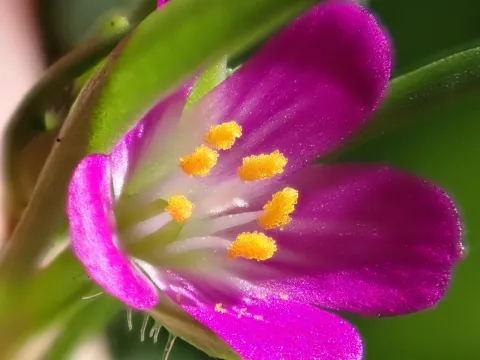
Calandrinia
Calandrinia
Calandrinia seeds should be sown indoors in late March or early April to ensure they get enough heat and light to germinate. The ideal temperature for germination is between 20 and 22 degrees Celsius.
What the section contains


Calandrinia
In regions with mild climates, direct sowing in the garden is possible once the danger of frost has passed in May. Seeds should be sown on the surface and pressed lightly, as they require light to activate the germination process.
A well-draining, lightweight potting mix is essential for the seeds. A blend of peat and coarse sand in a 1:1 ratio provides the necessary aeration and moisture control to prevent fungal issues.
Seedlings should be transplanted into individual pots once the first true leaves have developed. This stage is crucial for building a strong root system before moving the plants to their final location.
When planting in the garden, maintain a spacing of 20 to 30 centimeters between individual plants to promote good air circulation, which helps keep the foliage dry.
Calandrinia is a genus in the Montiaceae family and thrives as a succulent, requiring full sun to bloom effectively. If shaded, the plant tends to become leggy and loses its vibrant flowering characteristics.
The plant performs best in poor, sandy, or rocky soils with excellent drainage. Avoid rich soils, as excessive nutrition can cause the plant to produce too much foliage at the expense of its flowers.
As a succulent, it is highly drought-tolerant and requires watering only during prolonged dry spells or extreme summer heat. Overwatering is the most common cause of failure when cultivating this species.
The soil pH should be near neutral. The site must be well-drained, as stagnant water is lethal to the roots. Avoid low-lying areas where rainfall may pool and cause the root system to rot.
High air humidity is detrimental to Calandrinia. It thrives in open, airy conditions where there is constant movement of air, preventing the buildup of excess moisture on the leaves.
Root rot is the primary threat to Calandrinia, caused almost exclusively by improper soil moisture management and poor drainage. Ensuring a proper gritty substrate is the best way to prevent this infection.
Aphids and spider mites are the most frequent pests, particularly in dry conditions or when the plant is stressed by incorrect temperature levels. Regular inspections of the foliage are recommended.
Slugs and snails can cause significant damage to the succulent leaves, especially during wet seasons. Using bait traps or physical barriers can help protect the plants from these garden pests.
In indoor environments or greenhouses, powdery mildew can occur if ventilation is inadequate. Improving airflow and adjusting the humidity levels can effectively stop the spread of the fungus.
Practicing good garden hygiene, such as removing debris and dead foliage, helps eliminate potential breeding grounds for pests and pathogens that could target the succulent plants.
Seeds should be harvested after the seed pods have matured and dried but before they spontaneously burst. Prompt collection is necessary to prevent the seeds from scattering randomly throughout the garden bed.
Regular deadheading of faded flowers is highly recommended throughout the season. This maintenance practice prevents seed production and encourages the plant to channel its energy into continuous blooming.
Because many varieties are treated as annuals, the entire plant should be cleared and composted once the season ends and the first frosts occur, ensuring the area is prepared for the following cycle.
When used in floral arrangements, flower stalks should be harvested just as the blossoms begin to open. They serve as beautiful, though short-lived, components in small, decorative vases.
After harvesting, seeds must be dried thoroughly in a shaded, well-ventilated area. Once fully dry, store them in paper packets in a cool, dark place to maintain their viability until the next sowing season.