
Calandrinia polyandra
Calandrinia polyandra
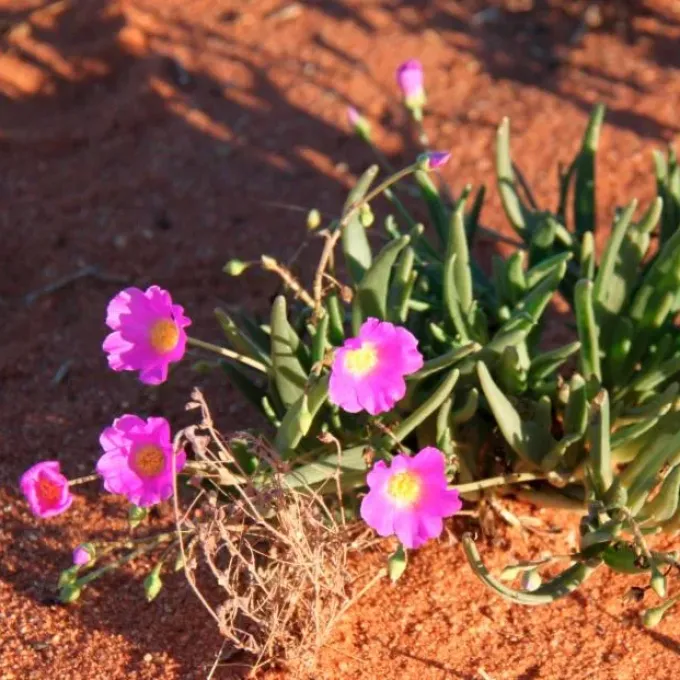
Description
Sowing dates
Calandrinia polyandra is a perennial succulent belonging to the Montiaceae family. It is recognized for its ability to thrive in arid environments, making it a subject of interest for water-efficient agricultural projects.
Propagation is typically achieved through seeds, which should be sown in early spring when temperatures are consistently warm. The ideal germination temperature is around 20 degrees Celsius.
Seeds are very fine and require surface sowing to ensure adequate exposure to light. Pressing them lightly into a well-draining, sandy substrate is sufficient to facilitate germination without burying them too deeply.
During the seedling stage, maintaining a consistent but light moisture level is crucial. Over-watering at this stage will inevitably result in damping-off disease, which is a common failure point for succulent propagation.
Once seedlings have developed at least two true leaves, they can be hardened off and transplanted into their permanent location, ensuring adequate spacing to prevent moisture accumulation.
Growing requirements
Native to Australian desert regions, this plant requires high solar radiation to maintain its compact growth form and promote flowering. It should be placed in areas receiving full sunlight throughout the day.
The soil profile must be extremely well-draining. A mix of coarse sand, gravel, and minimal organic matter is ideal to mimic the natural rocky habitats where the plant originates.
Watering requirements are low. The soil should be allowed to dry out completely between irrigation events. In Mediterranean or arid climates, the plant can rely mostly on sporadic rainfall once established.
Temperature tolerance is limited to warm conditions. Calandrinia polyandra is not frost-tolerant and will collapse if exposed to sub-zero temperatures, necessitating indoor cultivation or protection in colder regions.
Optimal growth is observed in climates with low humidity. High humidity levels, combined with warm temperatures, can cause internal physiological stress and increase vulnerability to fungal pathogens.
Main diseases and pests
Root rot remains the primary threat to the health of the crop. This is almost exclusively caused by over-irrigation or soil that retains moisture for too long, leading to anaerobic conditions in the root zone.
Fungal issues such as leaf spot or powdery mildew can occur if the plant is subjected to poor air circulation. Ensuring the plant is spaced correctly and located in a breezy environment helps mitigate these risks.
Pests such as aphids and spider mites can infest the succulent tissues during periods of heat stress. Careful monitoring of the plant foliage is necessary to detect and treat these pests at the onset of infestation.
Slugs and snails pose a risk to young plants and succulent leaves. Implementing a protective barrier or using targeted traps can help protect the integrity of the leaf structure.
Preventative agronomy is superior to chemical intervention for this species. By focusing on site selection, proper substrate preparation, and strict irrigation management, most threats can be naturally suppressed.