
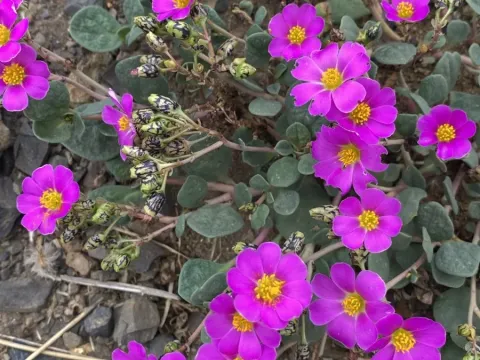
Cistanthe
Cistanthe
Cistanthe is a genus of succulent plants belonging to the family Montiaceae. Native primarily to the arid regions of South America, specifically Chile, these plants have evolved in some of the driest environments on Earth. They are well-adapted to survive with minimal rainfall, utilizing specialized tissues to store moisture for prolonged periods of drought.
What the section contains


Cistanthe
The morphology of Cistanthe varies from small annual herbs to more robust perennial subshrubs. The foliage is typically fleshy and often covered with a glaucous or waxy layer that reflects sunlight and minimizes water loss through transpiration. During the growing season, they produce vibrant, multi-petaled flowers that are highly attractive to desert pollinators.
Success in cultivating Cistanthe depends on replicating their native desert habitat. This requires extremely high light levels, as insufficient light will cause the plant to etiolate and lose its compact, attractive structure. They are strictly sun-loving organisms that do not tolerate shaded or semi-shaded environments.
The soil requirements are strict: the substrate must be highly mineral-based with excellent drainage properties. A mix containing gravel, coarse sand, and a small percentage of volcanic rock or pumice is ideal. The soil should never retain water; if moisture stays in the root zone for more than a day, it creates a significant risk of plant loss.
Watering practices must follow the cycle of the plant’s natural environment. During the growing season, provide sparse water when the substrate is completely dry. In the dormant season, water should be almost entirely withheld to prevent rotting. This cycle is crucial for both plant vigor and the promotion of seasonal flowering.
The primary threats to Cistanthe are fungal diseases triggered by overwatering or poor air circulation. Root rot is the most common and fatal condition, often starting deep in the root system before visible signs appear on the succulent leaves. Providing adequate airflow and keeping the root collar dry is the best preventative measure.
Common pests include mealybugs, which often hide deep within the crevices of the succulent leaves and are difficult to detect early. Root aphids can also infest the substrate, weakening the plant by sucking sap from the root system. Effective management involves using systemic insecticides and maintaining a strict quarantine for new plants to avoid infestation.