
Morrenia
Morrenia
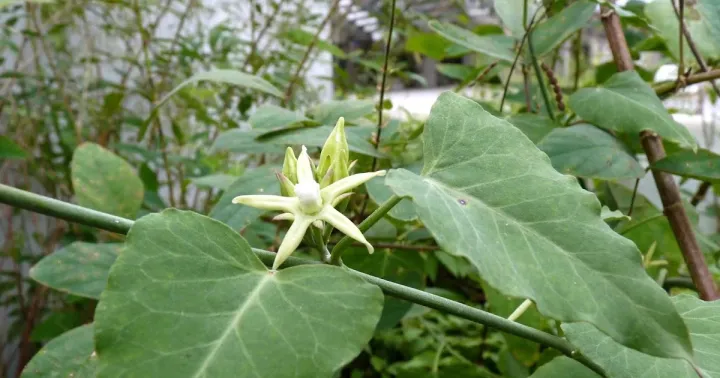
Description
Growing requirements
Morrenia, specifically the species Morrenia odorata, is a perennial vine belonging to the Apocynaceae family. In agriculture, it is often recognized as a climbing weed that exhibits aggressive growth patterns, particularly in orchard ecosystems.
Originating from South America, the plant has successfully naturalized in various subtropical regions. It thrives in well-drained, nutrient-rich soils and demonstrates a high level of adaptability to different light conditions, although it prefers sunny environments.
The botanical structure of Morrenia is characterized by long, twining stems and opposite leaves. As a member of the Apocynaceae, it contains a milky latex sap, which is a defensive chemical feature that contributes to its resilience against many common herbivores.
Environmental requirements include a warm climate with consistent moisture levels. The plant is sensitive to severe frost, which limits its spread in temperate zones, yet it remains highly productive in humid subtropical areas where the growing season is year-round.
Regarding agricultural use, it is generally considered a harmful weed rather than a cultivated crop. Its impact on citrus production is particularly significant, as the vine outcompetes trees for sunlight and nutrients, leading to reduced yield and stunted development of the host trees.
Main diseases and pests
The primary agricultural threat posed by Morrenia is its ability to physically strangle host plants. By covering the canopy, the vine induces significant stress on trees, causing branch deformation and disrupting the normal fruit-bearing process.
Disease management is minimal since the plant shows high resistance to typical agricultural pathogens. Instead, management focuses on eradication efforts to prevent the vine from establishing a dominance over the intended crop area.
Control strategies involve a combination of mechanical removal and chemical applications. Systemic herbicides are commonly used to target the root system, as simple pruning of the aerial parts does not ensure the elimination of the perennial rootstock.
Preventative measures are critical, including the cleaning of field margins and the removal of secondary vegetation that serves as an initial foothold for the vines. Monitoring for seedlings is essential, as the seeds are wind-dispersed and can colonize large fields quickly.
Sustainable control often requires integrating biological management practices with conventional methods. Future research into specific bio-herbicides offers potential for managing this resilient weed without excessive reliance on synthetic chemistry.