
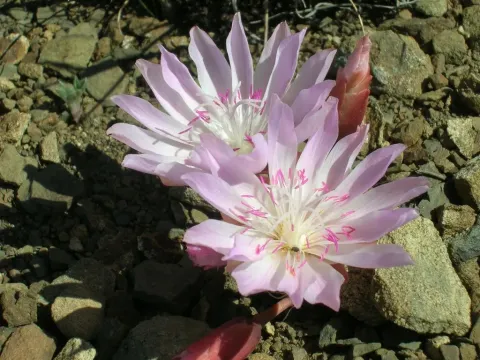
Lewisia
Lewisia Pursh
Seeds of Lewisia require stratification to ensure uniform germination. It is recommended to sow them in late winter to early spring, ideally in February or March.
What the section contains


Lewisia
Use a well-draining, grit-based compost for sowing. Maintain a temperature range of 15 to 18 degrees Celsius until the germination process is complete.
Seedlings develop slowly, so patience is required. Once the plants develop their first true leaves, they should be carefully pricked out into individual small pots.
Avoid overwatering seedlings, as they are highly susceptible to "damping off" in damp, poorly ventilated conditions during their early growth stages.
Hardening off the plants before transferring them to their permanent outdoor location is essential to prevent shock and ensure steady growth throughout the season.
Lewisia is a genus in the family Montiaceae. It originates from the rocky mountain regions and slopes of western North America, adapted to harsh environments.
The core requirement for successful cultivation is sharp drainage. Soil should be sandy, gravelly, and lean, avoiding high levels of organic matter.
Plants thrive in locations with bright, filtered sunlight. Excessive exposure to intense midday summer heat can scorch the foliage of sensitive species.
Watering must be precise, directed at the soil rather than the foliage. Keeping the central crown dry is the most important factor in preventing rot.
In regions with wet winters, overhead protection is necessary to keep the crowns dry, as the plants cannot tolerate standing water around the neck.
Crown and root rot caused by stagnant water represent the most significant threat to the survival of Lewisia in a garden or greenhouse setting.
Aphids are common pests that target the developing flower buds and stalks, necessitating regular monitoring and appropriate horticultural control measures.
Slugs and snails can cause severe damage to the fleshy leaves, especially in wet spring conditions, requiring the use of protective barriers or bait.
Powdery mildew can occur in areas with poor air circulation, particularly if the plants are crowded or kept in high humidity environments.
Physiological decline often occurs due to poor soil structure, where the lack of adequate oxygen in the root zone leads to rapid wilting and necrosis.