
Rock purslane
Calandrinia umbellata
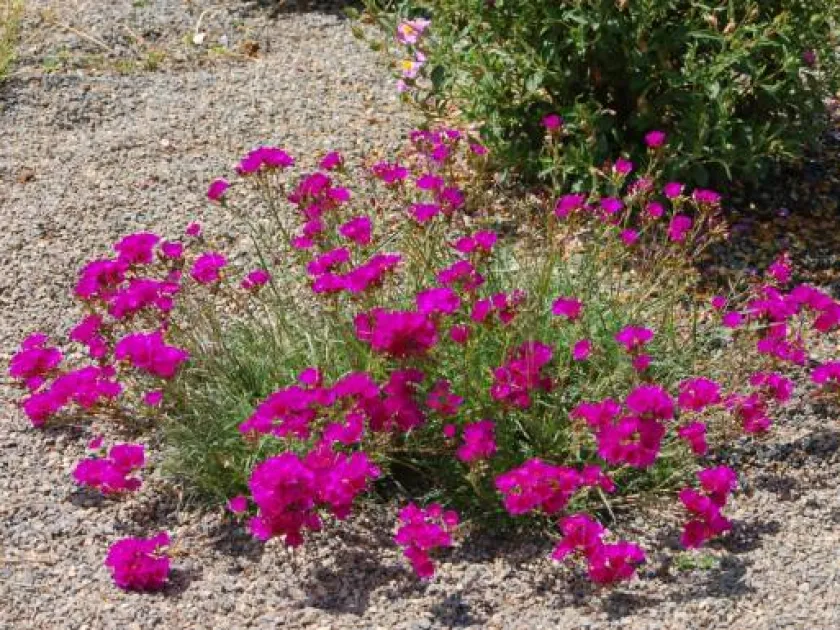
Description
Sowing dates
Rock purslane (Calandrinia umbellata) is a low-growing perennial herbaceous plant belonging to the Montiaceae family. In colder climates, it is typically cultivated as an annual ornamental bedding plant.
Seeds should be sown in late winter or early spring under controlled indoor conditions. Because the seeds are tiny, they should be surface-sown on moist, well-draining soil and not covered, as light is required for germination.
Once seedlings have developed their first true leaves, they should be pricked out into individual small pots. Keep them in a bright, cool location to prevent them from becoming leggy or weak during the early growth phase.
Hardening off is crucial before moving the plants outdoors. They should be gradually exposed to external conditions to ensure they adapt to temperature fluctuations and direct sunlight effectively.
Transplanting into the permanent garden site should happen only when all danger of frost has passed. Planting in groups of 3–5 provides the best visual impact in a rock garden setting.
Growing requirements
This species is highly dependent on full sun exposure. It requires at least 6–8 hours of direct sunlight per day to maintain its compact growth habit and trigger profuse blooming throughout the summer season.
Soil requirements are strict regarding drainage. Calandrinia umbellata thrives in poor, sandy, or stony soils. It will quickly perish if planted in heavy clay soils that retain moisture for too long.
The plant is remarkably drought-tolerant once established. It functions similarly to succulents, storing water in its leaves, which makes it perfect for xeriscaping or low-maintenance gardening in arid regions.
Maintaining a neutral to slightly acidic pH is ideal. If the native soil is too rich, it is advisable to mix in extra grit or perlite to decrease fertility and improve aeration around the root zone.
Heat is essential for the growth of Rock purslane. It enjoys warm daytime temperatures and will stop developing if exposed to persistent cold or wet spring weather, making site selection critical for success.
Main diseases and pests
The greatest threat to this plant is excessive moisture. Root rot is the primary cause of mortality, often triggered by overwatering or soil that fails to drain perfectly after heavy rainfall events.
Slugs and snails can cause significant damage to the fleshy foliage. Because the plant is often placed in rock gardens, these pests can be easily hidden under nearby stones; using manual control or bait is recommended.
Aphids might occasionally colonize the flower stalks during periods of extreme heat or drought stress. Insecticidal soap sprays are generally effective if the infestation is caught early enough.
Poor air circulation and high humidity can lead to mildew issues. Mulching the area around the plants with fine gravel or crushed stone helps keep the leaves off the damp soil, reducing disease risk.
Vigilant inspection during the rainy season is necessary. If the plants start to look mushy at the base, it is a clear sign of overwatering, and watering should be suspended immediately to allow the soil to dry.
Harvesting
The primary use of Rock purslane is decorative, specifically for rock gardens, stone walls, and gravel pathways. Its vibrant magenta-colored flowers create a striking contrast against grey stone surfaces.
Seed harvesting is possible once the seed capsules have turned brown and dried on the plant. Carefully clip the stems, place them in a paper bag, and shake to collect the tiny, dark seeds.
Flowering usually spans from June until the first autumn frosts. Removing faded blooms can encourage a second wave of flowers, although the plant naturally puts most of its energy into seasonal reproduction.
Container gardening is highly effective for this species. Using a cactus or succulent potting mix in a shallow bowl or trough provides the optimal environment for the plant to thrive on a sunny balcony.
The plant is a perfect example of heliophily, as its flowers close tightly during cloudy or overcast conditions. This unique behavioral characteristic should be considered when designing a garden layout.