
Moroccan dodder
Cuscuta maroccana
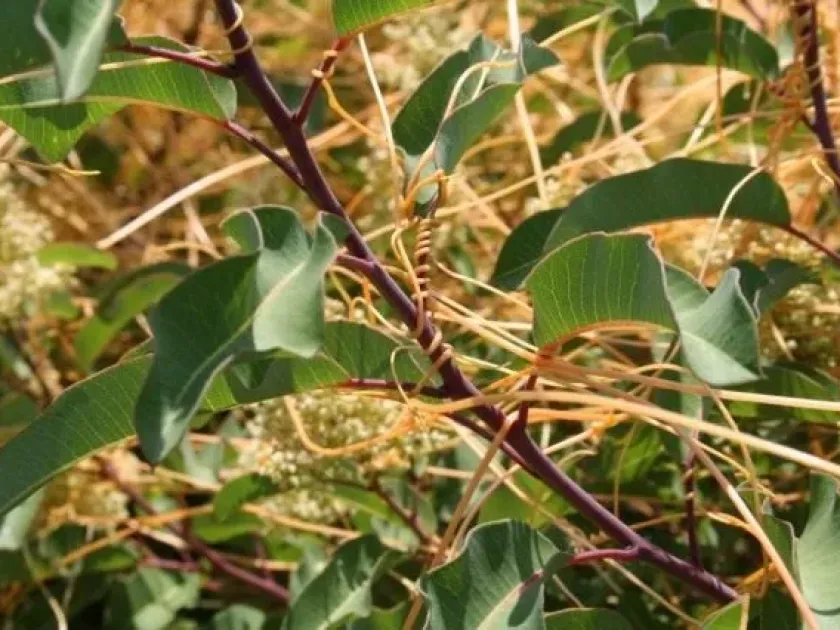
Description
Growing requirements
Moroccan dodder (Cuscuta maroccana) is a parasitic plant belonging to the Convolvulaceae family. Unlike typical crops, it lacks chlorophyll, leaves, and true roots, existing solely as a parasite that draws nutrients from host plants through specialized structures called haustoria.
The origin of this species is traced to the arid regions of North Africa. Over time, it has established itself in various agricultural environments globally, specifically where environmental conditions support its rapid vegetative growth during the peak summer months.
The plant thrives in warm and sunny climates with optimal temperatures ranging from 20°C to 30°C. It requires a consistent supply of host plants to complete its life cycle, as it cannot survive in isolation without tapping into the vascular system of a donor plant.
Regarding soil requirements, Moroccan dodder is relatively adaptable but flourishes in areas where the host crops are well-fertilized and irrigated. High soil moisture during the initial germination phase is essential for the parasite to successfully reach and attach to a host.
Agricultural practices for managing dodder involve rigorous monitoring of irrigation water and machinery, as these are common pathways for the accidental introduction of dodder seeds into new fields. Crop rotation with non-host species is a vital preventive strategy.
Main diseases and pests
The main threat posed by Moroccan dodder is its severe impact on crop yields. By siphoning off water, sugars, and essential minerals, the parasite weakens host plants, causing stunting, reduced biomass production, and, in cases of heavy infestation, complete plant death.
Moroccan dodder acts as a potent biological vector for various plant diseases. Because the haustoria create a direct bridge between the vascular tissues of multiple plants, viruses and phytoplasmas can move easily from infected plants to previously healthy crops.
The weed is extremely difficult to eradicate once established due to its high seed production and longevity. Seeds can remain dormant in the soil for years, waiting for the right conditions to germinate and begin the parasitic cycle anew.
Effective control strategies require a combination of physical and chemical methods. This includes hand-pulling or localized herbicide application on infested patches to prevent the parasite from flowering and setting new seeds, which would further contaminate the soil.
Phytosanitary regulations are essential for preventing the spread of this quarantine weed. Farmers should inspect incoming seed batches for potential dodder contamination and ensure that farming equipment is sanitized when moving between fields to avoid cross-contamination.