
Montia parvifolia
Montia parvifolia
Description
Growing requirements
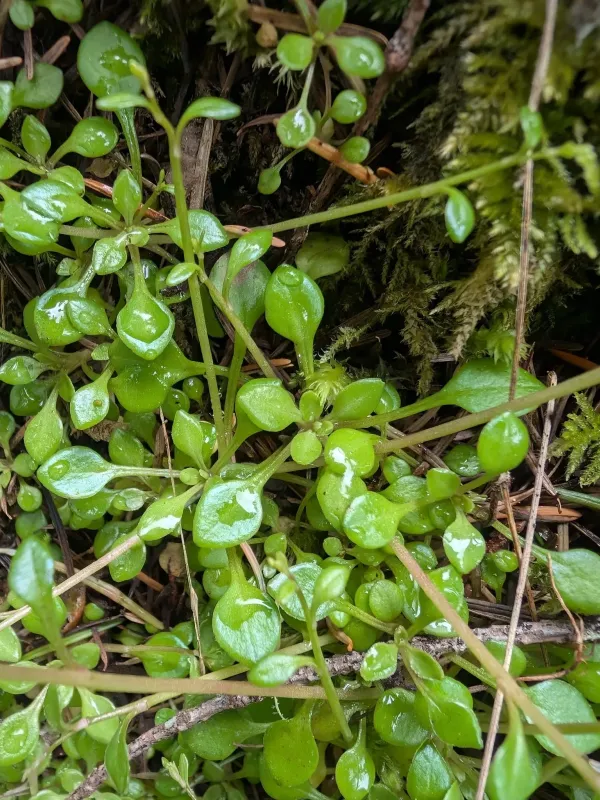
Montia parvifolia, commonly known as small-leaved montia, is a perennial plant belonging to the Montiaceae family. It is recognized for its succulent leaves and prostrate growth habit, which allows it to thrive in diverse ecological niches. In an agricultural context, it is managed as a high-value niche leafy crop.
The plant originates from the western regions of North America, typically found in moist, rocky mountainous areas. Its native habitat provides essential clues for cultivation: it performs best in cool environments with consistent moisture. It is particularly well-adapted to regions with maritime climates or high-altitude conditions.
Regarding soil requirements, Montia parvifolia demands well-drained, porous soil rich in organic matter. While it appreciates moisture, it is sensitive to waterlogged conditions, which can lead to root degradation. A light, loamy soil with a neutral pH is ideal for ensuring optimal nutrient uptake and vigorous foliage development.
Agricultural management requires careful attention to irrigation practices. The crop should be kept consistently moist but not saturated. In greenhouse production, maintaining relative humidity at moderate levels and ensuring adequate ventilation is essential to prevent physiological disorders and promote uniform growth of the succulent leaves.
The economic value of this crop lies in its utility as a specialty salad green, prized for its crisp texture and mild flavor. Furthermore, its ability to form dense ground cover makes it an excellent choice for erosion control in rocky landscape gardening, demonstrating dual utility in both horticulture and land conservation.
Main diseases and pests
The primary threats to Montia parvifolia health are fungal infections such as downy mildew and root rot, which are triggered by stagnant water and high humidity. Proper site selection and avoiding overhead irrigation during cooler periods can significantly reduce the incidence of these pathogens.
Common pests include gastropods like slugs and snails, which can cause significant damage to the succulent foliage. Integrated pest management (IPM) strategies, including the use of barriers or trap crops, are highly recommended to keep pest populations below the economic injury level without relying on harsh chemicals.