
Claytonia caroliniana
Claytonia caroliniana
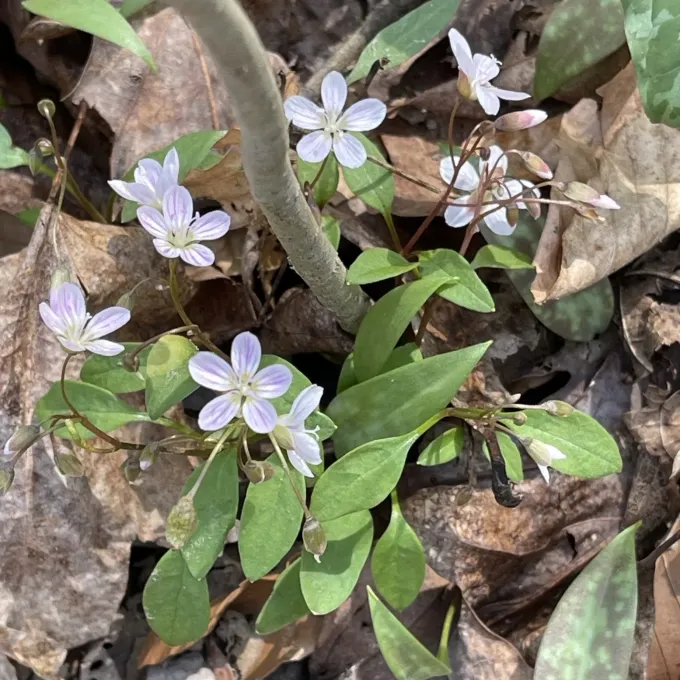
Description
Sowing dates
Claytonia caroliniana is an early-flowering ephemeral; therefore, in temperate climates, sowing should be conducted in late autumn or early spring immediately after the soil thaws.
The seeds require a period of stratification to germinate successfully, a process rooted in the plant's biological origins as a woodland species.
When grown in greenhouse conditions, sowing dates can be advanced to February or March to ensure early-season fresh produce for the market.
The optimal sowing depth is shallow, between 0.5 and 1 cm, as the seeds are fine and sensitive to the soil density and depth of coverage.
Maintaining a row spacing of 15–20 cm ensures sufficient growing space for the rosettes during their peak vegetative development phase.
Growing requirements
This crop, belonging to the Montiaceae family, thrives in the cool, moist conditions characteristic of deciduous forest floors in North America.
It requires rich, organic-heavy soils that are slightly acidic or neutral, featuring excellent drainage to prevent root-zone waterlogging.
The plant exhibits significant shade tolerance, making it an ideal candidate for intercropping under tree canopies or in shaded field segments.
Stable soil moisture is a critical success factor; any drying of the substrate triggers the plant's premature transition into a dormant state.
The temperature optimum for growth is between +10°C and +18°C, while summer heat generally causes the aerial parts of the crop to senesce.
Main diseases and pests
In both natural habitats and cultivation, Claytonia caroliniana is rarely affected by severe diseases, though excessive humidity can encourage rot.
The primary agricultural pests for this crop are slugs and snails, which can cause substantial leaf damage during periods of prolonged rainfall.
Leaf aphids may occasionally infest the plants, particularly when temperature fluctuations weaken the overall physiological resistance of the crop.
Disease prevention is best managed through careful irrigation scheduling and spacing plants adequately to facilitate consistent air circulation.
Applying organic mulch serves a dual purpose by suppressing soil-borne pests and maintaining the physical structure of the topsoil layer.
Harvesting
Harvesting is performed during the pre-flowering phase, as the leaves are at their most succulent and flavorful stage before energy shifts to blooms.
The leaves are typically harvested by cutting individual rosettes, being careful to avoid injuring the crown to potentially encourage leaf regrowth.
For commercial distribution, the produce must be cooled immediately after harvest to prevent wilting and degradation of leaf quality.
Given the delicate nature of the foliage, the shelf life is limited, necessitating market delivery within 24 to 48 hours of picking.
In culinary applications, the leaves are prized as a fresh salad green, offering a mild, crisp flavor profile similar to spinach or purslane.