
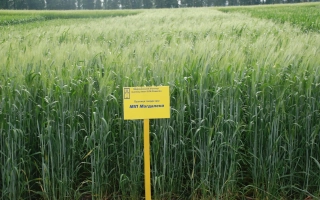

SKU #37559
·
33 views
MIP Olexander
Wheat
User rating
0 votes0% positive reviews
No ratings yet — be the first.
Wheat Type
Soft wheat variety
Growing Season
80-90 days
Plant; height
60-70 cm
Grain: gluten content
25-30%
Prices in stores
from8.53 €per 1 kg
pack from 426.39 € per 50 kg
1 offer from 1 store
Store offers · 1 from 1 stores
Prices are updated on loadLoading offers…
Available at: Агрозахист
Aggregator catalog: prices are collected automatically from store websites, normalized by AI and converted at the current exchange rate. Before ordering, confirm the price and availability on the store's website. This block is not indexed by search engines — the data is loaded after the page opens.
About product

A compact, high-yielding variety with superior lodging resistance and strong disease immunity.
Wheat Type
Soft wheat variety
Growing Season
80-90 days
Plant; height
60-70 cm
Grain: gluten content
25-30%
Description
Efficiency through Genetic Stability
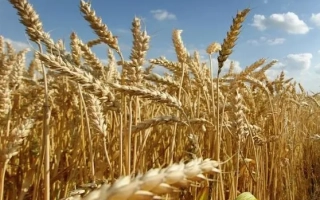
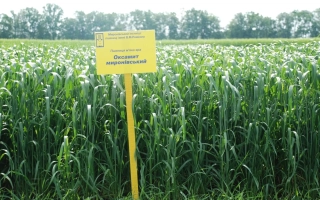
"MIP Oleksandra" is a soft wheat variety developed by the Myronivka Institute of Wheat, designed for farmers who prioritize yield stability over unpredictable high-risk experiments. The variety's primary competitive edge lies in its plant architecture: standing at a compact 60–70 cm, it exhibits exceptional lodging resistance. This structural advantage allows agronomists to utilize intensive nitrogen fertilization programs without the risk of crop lodging, even in challenging environmental conditions.
Key Agronomic Advantages
- Disease Resilience: The variety features robust natural resistance to wheat leaf rust, Fusarium head blight, and root rot. This reduces reliance on intensive fungicide applications, positively impacting the farm's production costs.
- Productive Cycle: With a 80–90 day vegetation period, the variety ensures a predictable harvesting window, allowing for streamlined logistics during the peak season.
- Commercial Grade Grain: With a gluten content of 25–30%, it meets industry standards for quality milling wheat, ensuring consistent marketability.
Is it the right choice for your farm?
MIP Oleksandra is engineered for producers aiming to bridge the gap between input costs and high output. With a potential yield of 6–7 tonnes per hectare, it serves as a reliable workhorse for Ukrainian agronomic conditions. This variety is optimal for those who value genetic reliability, low lodging risk, and proven performance in field conditions, rather than relying on high-maintenance imports.
Crop & resistance
Crop
Disease resistance
Specifications hover over for a hint about the specification
|
Wheat Type
Wheat Type
Biologically hard wheat differs from soft wheat in its greater demand for soil fertility and agronomic conditions (especially regarding field cleanliness from weeds), lower drought resistance and plasticity, relatively weaker root development, especially nodal roots, and lower ti... |
|
|---|---|
| Growing Season | 80-90 days |
| Plant; height | 60-70 cm |
|
Grain: gluten content
Grain: gluten content
Raw gluten of grain is a hydrated protein and consists of water-insoluble protein fractions, as well as a small amount of starch, fats, and other substances firmly bound by proteins. Since gluten is primarily composed of proteins, its yield and quality depend on the quantity and... |
25-30% |
| Resistance to lodging | |
| Potential Yield | 6-7 tons |
| Registration year | 2019 |
| Catalog | Catalog → Wheat |
| Legal data |
Show · 1
|
| Country | Ukraine |
Not yet комментариев. Be the first!
Alternatives
Wheat seeds · similar varieties




See also
Often considered together with this variety




Recently viewed
Products you’ve viewed on this site
Reviews · 0