


SKU #37574
·
30 views
Simkoda Myronivska
Wheat
User rating
0 votes0% positive reviews
No ratings yet — be the first.
Type of Development
Spring wheat
Wheat Type
Soft wheat variety
Ostistost'
Without stop
Growing Season
90-100 days
Store offers · 2 from 1 stores
Prices are updated on loadLoading offers…
Available at: Snpk
Aggregator catalog: prices are collected automatically from store websites, normalized by AI and converted at the current exchange rate. Before ordering, confirm the price and availability on the store's website. This block is not indexed by search engines — the data is loaded after the page opens.
About product

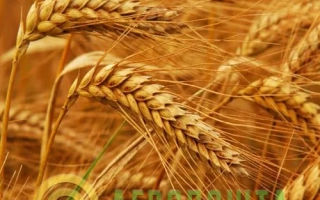
The spring wheat variety Simkoda Myronivska, of domestic production, has been included in the State Register since 2013 and is recommended for cultivation in the forest-steppe and Polesie regions. This medium-maturing soft wheat variety is characterized by high yield and genetic resistance to major diseases, such as powdery mildew, rust, and leaf septoria. The plant has a strong stem of medium thi…
Type of Development
Spring wheat
Wheat Type
Soft wheat variety
Ostistost'
Without stop
Growing Season
90-100 days
Description
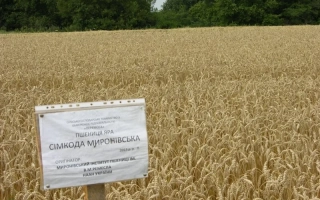
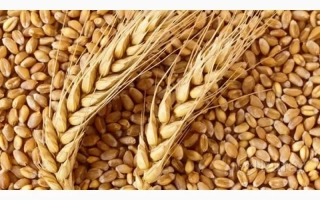
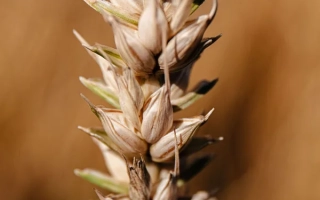
The spring wheat variety Simkoda Myronivska, of domestic production, has been included in the State Register since 2013 and is recommended for cultivation in the forest-steppe and Polesie regions. This medium-maturing soft wheat variety is characterized by high yield and genetic resistance to major diseases, such as powdery mildew, rust, and leaf septoria. The plant has a strong stem of medium thickness, approximately 83 cm tall, ensuring resistance to lodging. The ear is long, cylindrical, glabrous, and without awns. The grain is medium-sized, oval-shaped, with a reddish tint, with a thousand-grain weight of 43.1 g and a grain density of 764 g/l. Simkoda Myronivska exhibits high drought resistance, rated at 9 points, as well as resistance to shattering and lodging at the same level. Disease infection levels are low: powdery mildew — 1%, rust — up to 20%, leaf septoria — 15%. The grain contains high levels of crude protein (16.9%) and crude gluten (approximately 30%), ensuring high flour quality. The total glassiness of the grain reaches 94%, the flour strength is 177 arbitrary units, and the loaf volume from this flour is 650 cm³, indicating good baking properties of the variety. Agronomic requirements for the variety include early sowing with a seeding rate of 5.5–6.0 million germinating seeds per hectare and a sowing depth of 3–5 cm with mandatory rolling. The variety belongs to the intensive type, optimally combining high yield with grain quality, making it attractive for agricultural production in recommended regions.
Crop & resistance
Crop
Disease resistance
Specifications hover over for a hint about the specification
| Type of Development | |
|---|---|
|
Wheat Type
Wheat Type
Biologically hard wheat differs from soft wheat in its greater demand for soil fertility and agronomic conditions (especially regarding field cleanliness from weeds), lower drought resistance and plasticity, relatively weaker root development, especially nodal roots, and lower ti... |
|
| Ostistost' | |
| Growing Season | 90-100 days |
| Plant; height | 80-90 cm |
| Seed: mass 1.000 pcs seeds | 40-45 grams |
|
Grain: gluten content
Grain: gluten content
Raw gluten of grain is a hydrated protein and consists of water-insoluble protein fractions, as well as a small amount of starch, fats, and other substances firmly bound by proteins. Since gluten is primarily composed of proteins, its yield and quality depend on the quantity and... |
More than 30% |
| Resistance to lodging | |
| Registration year | 2013 |
| Catalog | Catalog → Wheat |
| Legal data |
Show · 1
|
| Country | Ukraine |
Not yet комментариев. Be the first!
Alternatives
Wheat seeds · similar varieties





See also
Often considered together with this variety






Recently viewed
Products you’ve viewed on this site
Reviews · 0