


SKU #37524
·
33 views
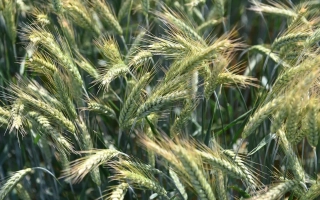
Wheat Arabella
Wheat
Danko Hodowla Roslin Sp.z.o.o.User rating
0 votes0% positive reviews
No ratings yet — be the first.
Type of Development
Spring wheat
Wheat Type
Soft wheat variety
Ostistost'
Ostistaya
Growing Season
80-90 days
Prices in stores
from1.33 €per 1 kg
pack from 33.17 € per 25 kg
1 offer from 1 store
Store offers · 1 from 1 stores
Prices are updated on loadLoading offers…
Available at: VRODA
Aggregator catalog: prices are collected automatically from store websites, normalized by AI and converted at the current exchange rate. Before ordering, confirm the price and availability on the store's website. This block is not indexed by search engines — the data is loaded after the page opens.
About product

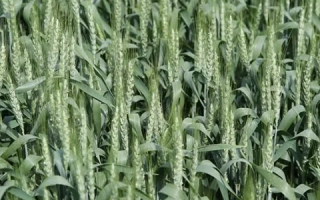
Arabella — this is a type of soft winter wheat (Triticum aestivum L.), characterized by early maturity and low stature. The plant has a semi-erect bush with short straw and medium length, which ensures excellent resistance to lodging and ear breakage. The ear is pyramid-shaped, medium density, white in color, with short awns and moderately curved teeth. Wax coating on the ear and flag leaf sheath…
Type of Development
Spring wheat
Wheat Type
Soft wheat variety
Ostistost'
Ostistaya
Growing Season
80-90 days
Description
Arabella — this is a type of soft winter wheat (Triticum aestivum L.), characterized by early maturity and low stature. The plant has a semi-erect bush with short straw and medium length, which ensures excellent resistance to lodging and ear breakage. The ear is pyramid-shaped, medium density, white in color, with short awns and moderately curved teeth. Wax coating on the ear and flag leaf sheath is strongly expressed, contributing to plant protection. The variety exhibits the highest resistance to kernel shattering, significantly improving harvest quality.
Arabella possesses excellent baking qualities, belonging to the A/E quality group. Kernel translucency reaches 60%, flour yield is 75-80%, and protein content in the grain can reach up to 16%. High gluten mass fraction and thousand-grain weight provide outstanding technological characteristics for the baking industry. The variety features good ear uniformity and kernel filling, as well as productive bushiness, contributing to stable and high yields.
Arabella is resistant to various diseases, including head fusarium, brown rust, powdery mildew, and septoria. It is well-adapted to acidic soils and suitable for cultivation on weak soils. Due to its high response to intensive cultivation conditions and the possibility of late autumn sowing, Arabella is a versatile and reliable choice for farmers. Recommended seeding rate at optimal timing is 380-450 germination seeds per square meter (approximately 180-200 kg/ha), ensuring maximum productivity and harvest quality.
Arabella possesses excellent baking qualities, belonging to the A/E quality group. Kernel translucency reaches 60%, flour yield is 75-80%, and protein content in the grain can reach up to 16%. High gluten mass fraction and thousand-grain weight provide outstanding technological characteristics for the baking industry. The variety features good ear uniformity and kernel filling, as well as productive bushiness, contributing to stable and high yields.
Arabella is resistant to various diseases, including head fusarium, brown rust, powdery mildew, and septoria. It is well-adapted to acidic soils and suitable for cultivation on weak soils. Due to its high response to intensive cultivation conditions and the possibility of late autumn sowing, Arabella is a versatile and reliable choice for farmers. Recommended seeding rate at optimal timing is 380-450 germination seeds per square meter (approximately 180-200 kg/ha), ensuring maximum productivity and harvest quality.
Crop & resistance
Crop
Specifications hover over for a hint about the specification
| Type of Development | |
|---|---|
|
Wheat Type
Wheat Type
Biologically hard wheat differs from soft wheat in its greater demand for soil fertility and agronomic conditions (especially regarding field cleanliness from weeds), lower drought resistance and plasticity, relatively weaker root development, especially nodal roots, and lower ti... |
|
| Ostistost' | |
| Growing Season | 80-90 days |
| Plant; height | 40-50 cm |
| Seed: mass 1.000 pcs seeds | 40-45 grams |
|
Grain: gluten content
Grain: gluten content
Raw gluten of grain is a hydrated protein and consists of water-insoluble protein fractions, as well as a small amount of starch, fats, and other substances firmly bound by proteins. Since gluten is primarily composed of proteins, its yield and quality depend on the quantity and... |
More than 30% |
| Resistance to lodging | |
| Potential Yield | 8-9 tons |
| Registration year | 2019 |
| Catalog | Catalog → Wheat |
| Manufacturer | Danko Hodowla Roslin Sp.z.o.o. |
| Legal data |
Show · 5
|
| Country | Poland |
Not yet комментариев. Be the first!
Alternatives
Wheat seeds · similar varieties




See also
Often considered together with this variety







Recently viewed
Products you’ve viewed on this site
Reviews · 0