
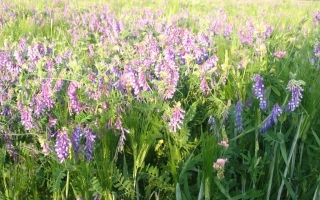


SKU #74045
·
57 views
Biloserivska 96
Vetch
Bila Tserkva DSS O.K. KolomiyetsUser rating
0 votes0% positive reviews
No ratings yet — be the first.
Culture Type
Annual
Assignment
Green Feed
Sowing Period
Early spring
Registration year
2001
Prices in stores
from0.99 €per 1 kg
pack from 2.32 € per 1 kg
3 offers from 3 stores
Store offers · 3 from 3 stores
Prices are updated on loadLoading offers…
Available at: Агроексперт-Трейд · Насінтрав · Zelenasadyba
Aggregator catalog: prices are collected automatically from store websites, normalized by AI and converted at the current exchange rate. Before ordering, confirm the price and availability on the store's website. This block is not indexed by search engines — the data is loaded after the page opens.
About product

A field-tested variety designed for high-quality early green fodder and effective soil nitrogen fixation.
Culture Type
Annual
Assignment
Green Feed
Sowing Period
Early spring
Registration year
2001
Description
Practical Application of "Bilotserkivska 96" Vetch
For agricultural producers focusing on efficient fodder production, the "Bilotserkivska 96" vetch variety from "Bilotserkivska DSS named after O.K. Kolomiets" serves as a reliable asset. As an annual crop, it is a proven choice for early-season green fodder production, filling the gap when pastures have not yet reached sufficient vegetative mass.
Role in Crop Rotation
Farmers choose "Bilotserkivska 96" for its predictable performance when sown in early spring. Its main utility lies in two specific scenarios:
- Green Feed Conveyor: Due to its rapid early growth, the crop effectively addresses protein deficiencies in animal diets during the start of the season, providing highly digestible green mass.
- Soil Enrichment: As a legume, this vetch leaves behind significant nitrogen levels, functioning as an excellent predecessor for winter cereals or industrial crops.
This variety is ideal for farms pursuing intensive feeding strategies while aiming to reduce dependence on expensive commercial protein supplements. The stability of "Bilotserkivska 96" is a result of long-term selection and adaptation to the Ukrainian climate, which helps mitigate risks associated with volatile spring weather conditions.
Optimal results are achieved by adhering to early spring planting schedules, allowing the crop to take full advantage of soil moisture for uniform germination and vigorous development. Integrating this vetch into a crop rotation plan not only secures high-quality fodder but also optimizes machinery usage during the busy spring planting season, ensuring farm operations run smoothly and efficiently.
Crop & resistance
Crop
Specifications
| Culture Type | |
|---|---|
| Assignment | |
| Sowing Period | |
| Registration year | 2001 |
| Catalog | Catalog → Vetch |
| Manufacturer | Bila Tserkva DSS O.K. Kolomiyets |
| Country | Ukraine |
Not yet комментариев. Be the first!






See also
Often considered together with this variety



Recently viewed
Products you’ve viewed on this site
Reviews · 0