


SKU #71136
·
64 views
LORIAN
Vetch
North Caucasian FARCUser rating
0 votes0% positive reviews
No ratings yet — be the first.
Assignment
Green Feed, Silage
Sowing Period
Early spring
Registration year
2001
About product

A reliable source of high-protein silage and green fodder with excellent growth energy during early spring sowing.
Assignment
Green Feed, Silage
Sowing Period
Early spring
Registration year
2001
Description
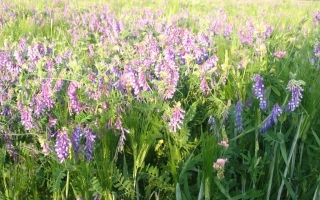
Focusing on Green Mass: Growing the 'Loriyaskaya' Vetch
When the challenge is building a high-quality forage base for livestock, choosing seed material from SKFNAZ is a strategically sound decision. The 'Loriyaskaya' variety, developed by experts at the North Caucasus Federal Scientific Agrarian Center (Chumakova V.V., Gonyan G.G.), has proven to be a reliable 'field asset' for producing high-protein feed.
Field Performance and Operational Insights
The primary advantage of this variety is predictability. For an agronomist focused on yields, it is essential that the crop performs consistently when sown in early spring. 'Loriyaskaya' responds exceptionally well to early planting dates, when the soil is still saturated with moisture. We observe high germination energy, which is critical for establishing a dense stand before peak summer temperatures arrive.
- Forage Utility: This variety is optimized for green feed and silage production. The resulting green mass is tender and leafy, which directly improves palatability for livestock.
- Agrotechnical Simplicity: Standard farming practices apply, simplifying the scheduling of sowing operations. The crop does not require complex chemical interventions and responds well to proper crop rotation.
- Yield Potential: With appropriate care, 'Loriyaskaya' provides a stable protein output per hectare, effectively reducing the cost per feed unit in the winter diet.
In terms of logistics and dealing with the originator, opting for SKFNAZ products ensures seed purity. There are no unwanted impurities, and the varietal consistency is high, eliminating surprises such as erratic maturation or uneven plant height during harvesting.
For livestock-oriented operations, this is a workhorse variety that allows you to fulfill your high-protein component requirements without excessive investment in complex cultivation techniques.
Crop & resistance
Crop
Specifications
| Assignment | |
|---|---|
| Sowing Period | |
| Registration year | 2001 |
| Catalog | Catalog → Vetch |
| Manufacturer | North Caucasian FARC |
| Legal data |
Show · 4
|
| Country | Russia |
Store offers
Prices are updated on loadLoading offers…
Aggregator catalog: prices are collected automatically from store websites, normalized by AI and converted at the current exchange rate. Before ordering, confirm the price and availability on the store's website. This block is not indexed by search engines — the data is loaded after the page opens.
Not yet комментариев. Be the first!




See also
Often considered together with this variety


GORODETSKAYA
ФГБОУ ВО Нижегородская государственная сельскохозяйственная академия
060 1 offer
2.21 €per 1 kg ≈ 114 ₴


Recently viewed
Products you’ve viewed on this site
Reviews · 0