


SKU #71145
·
61 views
SLIMSTEM
Vetch
User rating
0 votes0% positive reviews
No ratings yet — be the first.
Culture Type
Annual
Assignment
Green Feed
Registration year
1994
About product
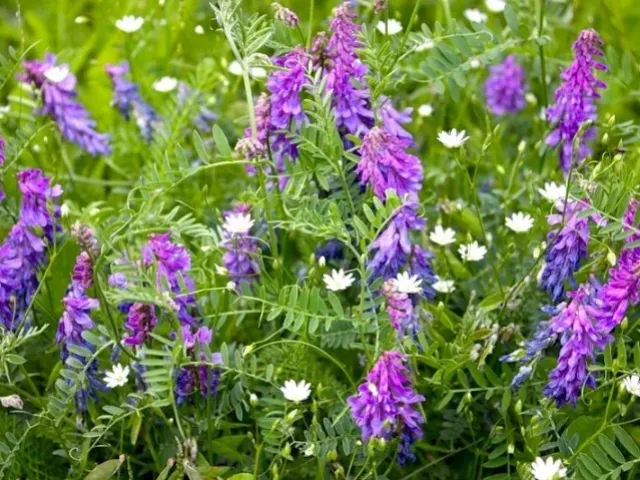
A high-protein annual vetch variety featuring a tender stem structure for superior forage quality.
Culture Type
Annual
Assignment
Green Feed
Registration year
1994
Description
Technical Specifications and Agronomic Profile
The 'Nezhnostebel'naya' vetch variety is a specialized cultivar developed by the Siberian Federal Scientific Center of Agrobiotechnologies (RAS). Its core architecture is engineered for biomass productivity, prioritizing stem elongation and foliage development over seed production. This metabolic focus makes it an ideal candidate for intensive green fodder systems.
Functional Characteristics
- Stem Architecture: The cultivar is defined by its tender stem structure, which reduces fiber lignification, significantly improving digestibility and palatability for livestock compared to conventional fodder vetch varieties.
- Growth Cycle: As an annual crop, it exhibits rapid early-season vigor, allowing for early harvesting and efficient integration into multi-crop rotations.
- Fodder Quality: Optimized for the budding stage, the foliage maintains high crude protein levels, acting as a nutritional anchor in mixed forage rations.
In field applications, this variety demonstrates high environmental plasticity. To manage its natural tendency toward lodging, technical recommendations include intercropping with cereal species (such as oats). This biological support system ensures higher harvest efficiency while maximizing the nitrogen-fixing benefits of the vetch root system, which contributes to overall soil fertility enrichment.
Crop & resistance
Crop
Specifications
| Culture Type | |
|---|---|
| Assignment | |
| Registration year | 1994 |
| Catalog | Catalog → Vetch |
| Legal data |
Show · 2
|
| Country | Russia |
Store offers
Prices are updated on loadLoading offers…
Aggregator catalog: prices are collected automatically from store websites, normalized by AI and converted at the current exchange rate. Before ordering, confirm the price and availability on the store's website. This block is not indexed by search engines — the data is loaded after the page opens.
Not yet комментариев. Be the first!


See also
Often considered together with this variety



LYGHOVSKAYA 28
Фгбну Внии Сахарной Свеклы И Сахара Имени А.Л.Мазлумова
060 1 offer
13.37 €per 1 kg ≈ 690 ₴


Recently viewed
Products you’ve viewed on this site
Reviews · 0