


SKU #61035
·
34 views
RT 291601
Sugar Beet
User rating
0 votes0% positive reviews
No ratings yet — be the first.
Direction Type
High-sugar type (ZZ)
Root vegetable; size
Medium
Root; shape
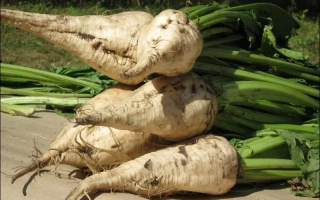
Oval-conical
Sugar Content
21-22%
About product

A high-sugar (ZZ-type) hybrid with up to 22% sugar content, designed for superior profitability in sugar production.
Direction Type
High-sugar type (ZZ)
Root vegetable; size
Medium
Root; shape
Oval-conical
Sugar Content
21-22%
Description
Focusing on Maximum Sugar Content
In the sugar beet market, choosing a hybrid often involves balancing tonnage with raw material quality. The RT 291601 hybrid is specifically engineered for those who prioritize sugar accumulation (ZZ-type). The breeding work carried out by the original group focused on reaching peak sugar concentration, making this hybrid highly attractive for processors with strict quality requirements.
Agronomic Profile
- Sugar Potential: Consistently hitting 21–22%. This level of concentration is a strong competitive advantage in intensive farming regions, often qualifying for premium pricing from refineries.
- Morphology: The oval-conical root shape is optimized for modern mechanical harvesting, significantly reducing losses during the digging process. Its medium size ensures consistent beet density and storage stability.
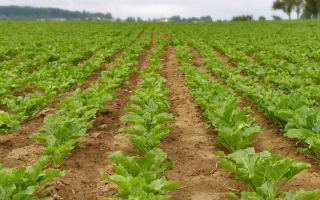
- Plant Density: A recommended density of 110,000 to 120,000 plants per hectare provides the ideal environment for the crop to reach its genetic yield potential without overcrowding.
Why Choose RT 291601?
This hybrid is designed for professionals aiming to maximize per-hectare profit through raw material quality rather than just bulk volume. RT 291601 thrives in fertile soils where standard protection and fertilization protocols are followed. Its standout feature is its reliable sugar accumulation, though it requires precise nitrogen management. To ensure maximum sugar levels, growers must manage nitrogen application carefully during the second half of the growing season to prevent quality degradation.
RT 291601 demonstrates how specialized regional breeding can successfully compete with international varieties by providing predictable, high-quality output tailored for local processing conditions.
Crop & resistance
Crop
Specifications hover over for a hint about the specification
| Direction Type | |
|---|---|
| Root vegetable; size | |
|
Root; shape
Root; shape
Roots can be round, elongated-round, cylindrical, conical. |
|
| Sugar Content | 21-22% |
|
Recommended Density
Recommended Density
Optimal productivity is achieved at a planting density of 4000-5500 plants/ha. Possible planting scheme: 300-500x40-80 cm. |
110-120 тыс. шт/га |
| Registration year | 2005 |
| Catalog | Catalog → Sugar Beet |
| Legal data |
Show · 9
|
| Country | Russia |
Store offers
Prices are updated on loadLoading offers…
Aggregator catalog: prices are collected automatically from store websites, normalized by AI and converted at the current exchange rate. Before ordering, confirm the price and availability on the store's website. This block is not indexed by search engines — the data is loaded after the page opens.
Not yet комментариев. Be the first!
Alternatives
Sugar beet seeds · similar varieties




See also
Often considered together with this variety







Recently viewed
Products you’ve viewed on this site
Reviews · 0